THE MARGIE JOSEPH STORY, PART 2: THE ATLANTIC YEARS (1972 - 1978) Margie: “When you get to work with Arif Mardin, the monarch, then you have arrived. He was one of the sweetest spirits that I have encountered ever in my entire recording period. I loved him, and I felt his love for me – a very gentle and kind man. He made you want to sing for him.” After releasing two debut singles on Okeh and six singles and two albums on Volt between 1967 and ‘72, Margie moved to Atlantic Records. Her husband at the time, Larry McKinley, negotiated the deal with Atlantic’s Jerry Wexler. Her first album for the label was produced and arranged by Arif Mardin. Born in Istanbul, Turkey, Arif Mardin (1932-2006) moved to Boston at age 26. He met Atlantic’s Nesuhi Ertegun at the 1958 Newport Jazz Festival and became his assistant four years later. Nesuhi was the brother of Ahmet Ertegun, Atlantic’s co-founder. Just seven years later, Arif had risen to Vice President of the company. His list of collaborators is nothing short of remarkable: Aretha Franklin, the Rascals, Ben E. King, King Curtis, Dusty Springfield, Brook Benton, Roberta Flack, Donny Hathaway, the Bee Gees, Chaka Khan, Peabo Bryson, Norah Jones, and many more. It’s no surprise that he became a 12-time Grammy Award winner. 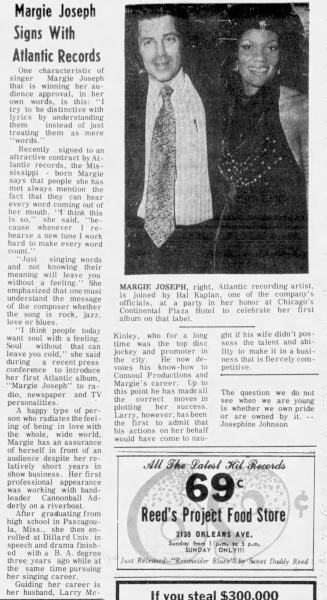 The Louisiana Weekly March 3, 1973, p. 3 COME BACK, CHARLESTON BLUEMargie’s first single for her new label actually appeared not on Atlantic but on its subsidiary Atco in July 1972. The label credits read “Donny Hathaway with Margie Joseph.” Quincy Jones had hired Donny Hathaway to score the soundtrack LP for Come Back Charleston Blue. The movie wasn’t a box office success, and the soundtrack album (Atco SD 7010) peaked only at # 198 on the Billboard 200 that September. Still, the theme song – a gentle, flowing melody – remains a standout at just 2:04 in length, longer than Donny’s 1:48 instrumental Bossa Nova on the flip. Margie: “Actually, I was in the studio recording the Margie Joseph album, my first album on Atlantic, and Donny Hathaway came into the studio. He heard me singing, and he had already engaged Valerie Simpson to do that movie theme, but he wanted me on the recording. After they worked out their legal matters, I did the recording with Donny. I thought it was fantastic. That was a wonderful opportunity for me to experience Donny Hathaway. I held him in such high esteem. He’s such a musical genius. And his daughter Lalah is flooring me also. I was so hurt when we lost him. It’s such a great loss to the record industry. I saw that movie, Come Back, Charleston Blue. It kind of reminds you of Super Fly.” A film score for Super Fly was composed by Curtis Mayfield, also in 1972. In the film, the closing theme – Come Back, Charleston Blue – is sung by Donny Hathaway and Valerie Simpson, but on the Atco single and soundtrack, Valerie’s part was replaced by Margie because Motown would not permit Valerie’s vocals to appear on an Atco release. 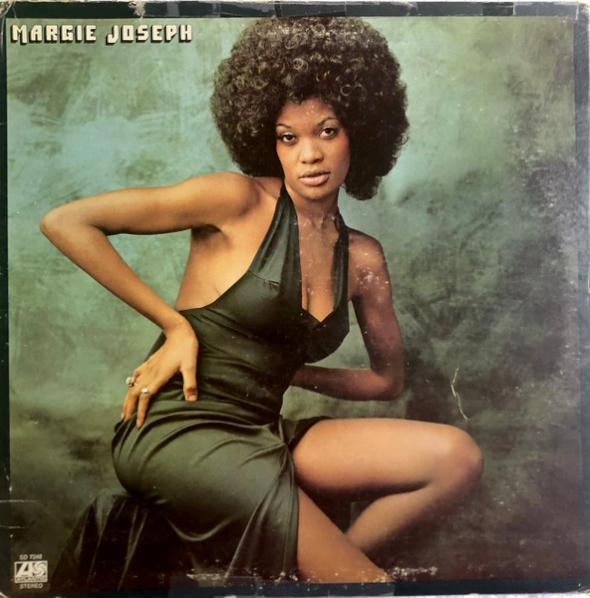 Margie’s first Atlantic album, Margie Joseph (SD 7248), was recorded at Atlantic Studios in New York on two occasions: June 13, 1972 (seven tracks), and September 19-20, 1972 (five tracks). The June session featured top-tier session players, including Cornell Dupree and Hugh McCracken (guitars), Bernard Purdie (drums), Jerry Jemmott (bass), Richard Tee (keyboards), and Ralph MacDonald (percussion). Background vocals came from Cissy Houston, Deirdre Tuck, Myrna Smith, Renelle Stafford, Sammy Turner, and Sylvia Shemwell. Cissy, Myrna and Sylvia had all been members of the Sweet Inspirations in the late 1960s. LET’S GO SOMEWHERE AND LOVEFrom the June session came Margie’s first single on the main Atlantic label. Released in August 1972, Let’s Go Somewhere and Love is a mellow, country-soul tune with a clip-clop beat. Written by Kenny Odell and Larry Henley, it had been recorded earlier that year by Bobby Goldsboro and then Sandy Posey under the title Why Don’t We Go Somewhere and Love. Six years later, Kenny Rogers and Dottie West also covered it. Margie: “I liked that one. Arif and Jerry (Wexler) picked a lot of those songs. That was my first album for them, and they were trying to find me and present me.” On the B-side was her powerful take on Rare Earth’s 1970 hit Born to Wander, written by Tom Baird, aka Harold Thomas Baird, a Motown musician/songwriter/arranger/producer who died tragically in 1976 at the age of 32 in a catamaran accident. Margie’s version appears on no album. Her second single, Touch Your Woman, arrived in December 1972. Originally written and released by Dolly Parton in March 1972, Margie’s version is more rhythmic and soulful. “Jerry Wexler liked that song. He wanted me to do it. When my first-born child heard it, she would stand on top of the kitchen counter and entertain my friends with that song.” Its flip side, an optimistic, downtempo and a bit bluesy love song called I’m So Glad I’m Your Woman, was co-written by Arif and Margie. The September session brought more notable musicians into the studio, including David Spinozza (guitar), Chuck Rainey (bass), Norman Pride (percussion), and David Newman (sax/ flute). From this session came the third single - Margie’s dynamic and soulful version of Al Green’s Let’s Stay Together, which reached # 43 on Billboard’s soul chart. The flip was her emotionally charged take on Etta James’ 1967 I’d Rather Go Blind. “I chose to do that, because I had a story to tell in my spirit. I wrote a monologue to that, which I never got paid for.” MAKE ME BELIEVE YOU’LL STAYThe album opens with the funky I Been Down, written by Maury Keener and Rob Galbraith, and later covered by Sylvester and the Two Tons. Next is Make Me Believe You’ll Stay, a country-soul ballad by John W. Anderson that Margie had already recorded on her first Volt album in 1971. “Arif really liked that song. I believe Jerry and he chose that I should do it again.” Donna Weiss’ dramatic ballad Turn Around and Love You, first recorded by Rita Coolidge in 1969, becomes a passionate showpiece under Arif’s arrangement – almost like a stealthily growing show song. Later also Dee Dee Warwick and Irma Thomas recorded the song. Ben Peters’ I’m Only a Woman - earlier recorded by Peggy Little in 1969, then Dottie West and Tammy Wynette – becomes a soulful and wistful ballad in Margie’s hands. The fast and funky You Better Know It, written by gospel veterans David Williams and Calvin White, adds even more variety. Calvin is also known as a member of the Sandpebbles and C & the Shells in the late 1960s. There are still two quite familiar songs on the album. Bobby Bland’s 1959 classic I’ll Take Care of You, written by Brook Benton, is another highlight. “I chose to do that. The story behind that song? I was about between ten or twelve years old, and I used to listen to the radio station WLAC out of Nashville. John R. (John Richbourg) was the radio announcer, and around 10 o’clock every Sunday night he would play that song. I begged my momma to stay up till after I hear that song. I felt that song in my spirit. When I got a chance to record it, I did.” Her version is slow, bluesy, and deeply affecting. She also covers Bobby Patterson’s How Do You Spell Love, featuring a notable sax solo from David Newman and electric piano by Arif. Margie’s version is not as hard-hitting as Bobby’s own recording a few months earlier. Some critics at the time claimed that Margie sounded too much like Aretha Franklin, pointing out that Arif produced both singers and often used the same musicians. Margie has acknowledged that “the company wanted me to be another Aretha Franklin.” After hearing this album for the first time way back over fifty years ago, that connection didn’t even cross my mind. I remember that my first conclusions were that Arif seems to be quite fond of pretty country and pop tunes and has the desire to transform them into a more soulful mode. Of course, there are similarities in Aretha’s and Margie’s voices and singing, but not as much as, say, when comparing Aretha to Shirley Brown. True, that was still ahead: Woman to Woman was released only in August 1974. The resemblance was overstated – Margie’s voice carries its own distinct strengths. 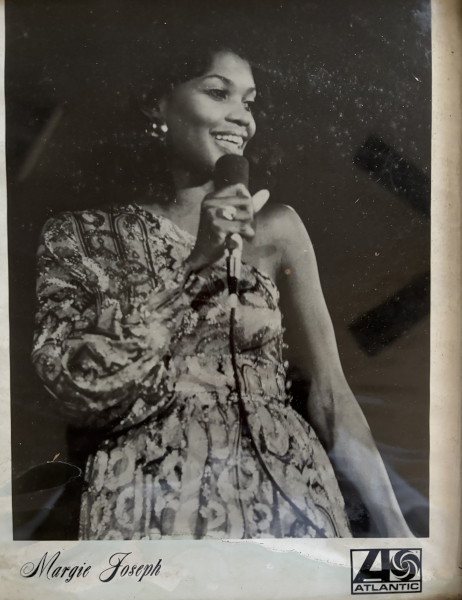 SWEET SURRENDERProduced, arranged and conducted once again by Arif Mardin, Margie’s Sweet Surrender album was recorded at Atlantic Studios in New York in summer 1973 with many of the same musicians, plus Richard Tee (keyboards), Norman Harris (guitar), Bob Babbitt (bass), and Andrew Smith (drums). Former Sweet Inspirations members Cissy, Myrna and Sylvia, plus Deidre, returned, now joined by Judy Clay and Gwen Guthrie. The album was released in early 1974. The lead single, Come Lay Some Lovin’ on Me, written by Paul Kelly, was released in October 1973. Paul had introduced this chunky, driving number on his Don’t Burn Me album and interestingly had also released it as a single only five months earlier, in May 1973. Margie’s version outcharted Kelly’s (# 32-soul vs. # 95-soul). “Arif chose that song.” Stan Free plays synthesizer on this track. A mellow mid-pacer named Ridin’ High was placed on the B-side of the single. It was one of the two new songs on the album. This sunny and positive song was composed by Margie and Arif. “I was in love. The first time ever I was in love, and I wanted to sing about it. I had divorced Larry McKinley in 1973. I only had one child, Dana, out of that marriage. My second husband is the one I truly loved. He deceased ten years ago. That’s the first time I had ever been in love. He was in military. Maybe that’s why I was attracted to him. He wasn’t in the record business” (laughing). MY LOVEThe second single, My Love, became the biggest hit in Margie’s career, reaching # 10-soul and # 69-pop in 1974. Originally a # 1 hit for the Wings one year earlier, Margie’s cover of this Paul & Linda McCartney’s song was smooth and sentimental. “I was in New York and I heard the song in a car. We were going to the studio. I told Larry ‘I’m going to cover that’, and as soon as I saw Arif I said ‘I want to do My Love’, and he said ‘okay.’ Paul McCartney got in touch with Arif and told him that he really loved it. It was very popular. I always closed shows with it. It was my closing song because of the guitar ending. Cornell Dupree was a magical guitar player. I remember watching him. He used to smoke a pipe.” The B-side, Sweet Surrender, is one of Margie’s finest vocal performances – a powerful, soulful remake of Bread’s 1972 hit (# 15-pop). “I believe that Arif allowed me to choose those Bread’s songs for the album.” Another Bread cover, Baby I’m-A Want You, becomes an emotional showcase for Margie. In 1971 Bread earned a gold record with this David Gates’ song. Two more Paul Kelly songs appear, including Come with Me - from Paul’s Don’t Burn Me album – which in Margie’s hands begins gently and swells into a passionate plea. “People played that. People tell me all the time, especially men, how they liked that song.” Other covers include a pulsating stepper called To Know You Is to Love You, written and originally recorded by Stevie Wonder and Syreeta Wright. “Arif chose that one, and B.B. King recorded it, too.” If I’m Still around Tomorrow is a beautiful and soft ballad, written by Ralph MacDonald and William Salter. “That’s a classic. Ralph was in the studio with me. He gave me that song.” Later Ralph himself recorded the song with Roberta Flack. Margie picked the sweet and heartfelt (Strange) I Still Love You, which originally appeared on Jerry Butler’s album The Iceman Cometh in 1968. It was composed by Norman Harris, Mikki Farrow and Jerry himself, and it was used as a flip to Margie’s upcoming single release. Margie thinks very highly of the Sweet Surrender album and I agree with her. I hope that it has made a strong and lasting impact on all of you who have been able to listen to it. One song that Margie is especially fond of is a mellow and spiritual ballad called He’s Got a Way, which its writer, Billy Joel, had released in 1971. “That’s a gospel song to me. I could sing that in church, and I’ve thought about singing it in church on many Sundays, too.” 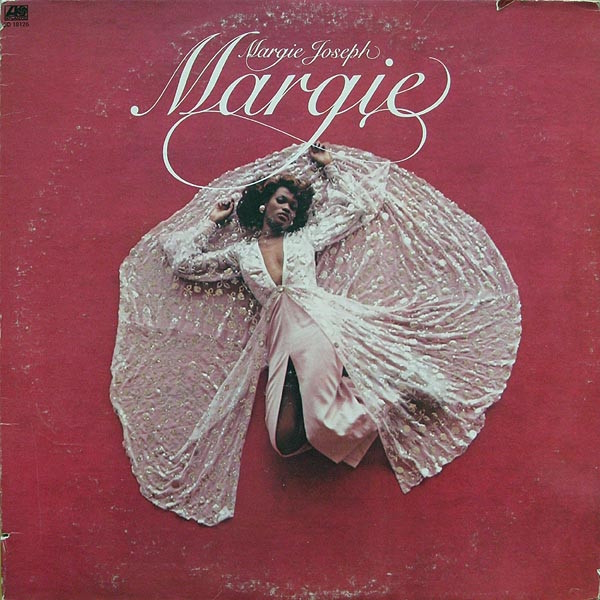 WORDS (ARE IMPOSSIBLE)Margie’s third Atlantic album Margie appeared in June 1975. The core team – Margie and Arif – returned with some new musicians including Tony Levin (bass), Stephen Gadd (drums), Hugh McCracken (guitar), Pat Rebillot (keyboards), and Charlie Brown (tenor sax). Main sessions took place in June and November 1974. The first single, Words (Are Impossible), released in October 1974, is an English adaptation of the Italian song Vado Via. Enrico Riccardi and Luigi Albertelli composed this melodic, big ballad for Drupi in 1973. Among the musicians on Margie’s track there are Bob Babbitt on bass, Stephen Gadd on drums, Hamish Stuart and Tony Bell on guitar, Carleton Kent on keyboards and Armen Halburian on percussion. To complete sweetening there are still Geil Kantor, Merle Miller and Tasha Thomas on background vocals. On Billboard’s charts, Margie’s single reached # 27-soul and # 91-pop. “That was one of Arif’s choices, and Stevie Wonder loves it, too. I didn’t like it. The actual lyrics were great, but I didn’t have the real feeling to it, but now I’ve really begun to appreciate that and some other songs. In Jamaica and Europe people were requesting it. They wanted me to sing it a lot.” Bobby Hart and Danny Janssen wrote the English lyrics for Words. The same session produced Margie’s second single off the album. The singer/songwriter Robert John co-wrote with Michael Gately a song titled I Can’t Move No Mountains for Blood, Sweat and Tears in 1972, and now Margie discoed this pop song and made it a dancefloor filler, and Arif helped with rich orchestration. Three years later Shirley Brown recorded her version of the song. “Arif picked that for me. That was a chance for me to demonstrate my ability to go pop. I performed it a lot in London, but you have to work-out, when you’re getting ready to sing it” (laughing). On the flip there was Sam Dees’ beautiful ballad named Just as Soon as the Feeling’s Over, which Jackie Wilson cut around the same time but released only two years later, and Sam himself and Uvee Hayes released it too. On Margie’s sensitive and soulful delivery, Carl Hall is one of the background vocalists along with Maretha Stewart and Tasha Thomas. STAY STILLMargie and Arif co-wrote a memorable toe-tapper called Stay Still, and this romantic song peaked at # 34-soul in October 1975. “There again, I was in love. I wrote the lyrics, and Arif put the music. I was always the writer of the lyrics. I think Chuck Rainey played the bass. That bass line is so smooth. I loved it.” The very album opens with Margie’s and Arif’s almost psychedelic jam called Sign of the Times, featuring Donny Hathaway as one of the background vocalists. “Donny was around the studio all the time. Sign of the Times is like a prelude to Carole King’s song.” That Carole’s song is a bouncy number with social message called Believe in Humanity, which Carole had introduced on her Fantasy album in 1973. Bill Withers recorded his rather pessimistic, even gloomy song called The Same Love that Made Me Laugh on his +’Justments album in 1974. “I chose that. When I saw Bill Withers perform in New Orleans, that stayed in my mind. I told Arif that I want to do that.” Moving in a more positive direction lyrically, next Margie tackles Brian Potter’s and Dennis Lambert’s haunting pop song named Who Gets Your Love, and it doesn’t differ much from Dusty Sprinfield’s original recording two years earlier. “It was brought to me by Arif. I love that song, and I got a chance to sing it the way I want to sing it.” The same songwriting pair of Ralph MacDonald and William Salter that wrote If I’m Still Around Tomorrow on Margie’s Sweet Surrender album, penned an almost fast-paced Promise Me Your Love, which flows almost like a show song with strong strings and choir sweetening. Donny Hathaway is again one of the background voices. Margie turns David Pomeranz’s sweet and pretty ballad called If You Walked Away into a strong emotional delivery, and finally there’s the second Carole King song on the album titled After All This Time, which Carole wrote and recorded first in 1971. The joyful message of this mid-tempo melodic song resonates in Margie’s singing. On Margie there were three original songs, and the overall sound was more poppy than on previous albums. However, good arrangements and rich orchestration on many tracks more than compensate it. Margie also likes the album, but she has some remarks: “I had some very good albums and they were just locked away – and just let them die. There were the best producers and the best musicians, and to this very day I don’t know what went wrong. I don’t have a clue. I did what I was asked to do. I gave everything in me – all those songs, the performance, the delivery. That’s why I walked away from that business and I didn’t look back.” Here Margie is referring to the year of 1978, three albums away. WHAT’S COME OVER MEWMOT – “We Men of Talent” – was a record label founded in Philadelphia in 1973 by Alan Rubens and Steve Bernstein, and its product was initially distributed by Atlantic Records, then from 1978 by Fantasy Records, and two years later it switched over to an independent distribution. During its ten-year existence, the biggest hits on WMOT was Frankie Smith’s gold single, Double Dutch Bus, in 1981, and other significant artists on the label included Major Harris, Blue Magic, Barbara Mason, Heaven and Earth, Sweet Thunder and Brandi Wells. Alan Rubens: “We also had a couple of giant hits over in Europe that weren’t hits in the States, Fat Larry’s Band’s Zoom and Booker Newbury III’s Love Town.” The first peaked at # 2 in September 1982 on the official UK singles chart, while the latter one went as high as # 6 in May 1983.  Alan Rubens In October/November 1975 WMOT cooperated with one of Atlantic’s subsidiaries, Atco, in releasing a single by Margie Joseph and a Philly group called Blue Magic. Margie: “That was a one-time adventure with Alan Rubens.” The lead tenor of the group, Ted “Wizard” Mills, had written a soft and sophisticated Philly ballad called What’s Come Over Me, and the group had recorded it on their debut album titled Blue Magic two years earlier. By adding Margie’s vocals to the track, the producer and arranger, Norman Harris, turned the single into a reasonable r&b hit (# 11-soul). This gentle and sweet duet song appeared also on the Thirteen Blue Magic Lane album in 1975. On the flip they put a light Philly dancer named You & Me (Got a Good Thing Going), which was mysteriously credited to Mystro & Lyrics, who actually are the brothers Melvin & Marvin Steals. This collaboration between artists and labels expanded into a 1976 double album, Live!, recorded at the Latin Casino, a New Jersey nightclub, and mixed and edited at Sigma Sound Studios. The featured artists on stage were Margie, Blue Magic and Major Harris. Among arrangers there were Jack Faith, Richard Rome, Vince Montana, Jr. and Norman Harris, and if you look at the list of musicians, you can spot such names as Larry James (drums), Edward Moore and Ted Cohen (guitars), Larry LaBes (bass), Erskine Williams (keyboards) - plus the horn section. Margie: “That was my first time in Casino. Major Harris was the headliner. We had to do choreography and all of that. It was a beautiful, beautiful show. We could have taken that show on the road, but we didn’t. It ended there.” The co-founders of WMOT, Alan Rubens and Steve Bernstein, are credited as the executive producers of the album. Alan: “I put the whole deal together. The concert was absolutely great. It was the first time something like that was done, where they put three acts together for the Latin Casino. Charlie Gerson, who owned the Latin Casino, was a friend of mine. One day we were sitting around and talking about it and he said that he didn’t know if any of those acts was strong enough on their own to star at the casino, but putting them all together to play in that room would be something else. That was the motivation to put it that way.” The show opens with a rousing performance of the O’Jays’ recent golden hit, I Love Music. All the singers took turns in this musical fiesta and they were supported by the full Latin Casino Orchestra. The next three songs are Margie’s solos. The beautiful Feelings was a hit for Morris Albert in 1974 and after that the song has turned into a modern standard with Walter Jackson and dozens of others scoring with it. Margie: “I chose that song. That became like a signature song for me at that time – that and My Love.” Margie’s live performances of both songs are quite thrilling and very emotional. Between those two ballads she went up-tempo with Ridin’ High. Next Major Harris hits the stage and does a duet with Margie on You’re a Special Part of Me, a song that Diana Ross and Marvin Gaye released in 1973. Major Harris and Blue Magic take the stage for the next 40 minutes (sides B and C on the double album), until Margie and Blue Magic deliver a highly improvised performance of What’s Come Over Me. They continue with a surprisingly strong version of I’m Gonna Make You Love Me, which Dee Dee Warwick recorded originally in 1966. The program ends with a show tune, which sounds like a closing song in a cabaret, titled Funny Guy, Funny Girl, Funny Love. Interestingly this unconventional song was composed by Joseph B. Jefferson. Margie: “When we recorded with Major Harris and Blue Magic at the Latin Casino, it gave me the opportunity to feel like I was going to eventually venture into my holistic dream in this business. I majored in drama. I have degrees in speech and drama and I wanted to perform show tunes. I wanted to be performing in musicals. When we did the Casino, I was ready to make that transition. I want to acknowledge those artists. We’ve lost Major Harris, Keith Beaton and Richard Pratt of the Blue Magic. I enjoyed them and I loved them. They were so kind to me.” 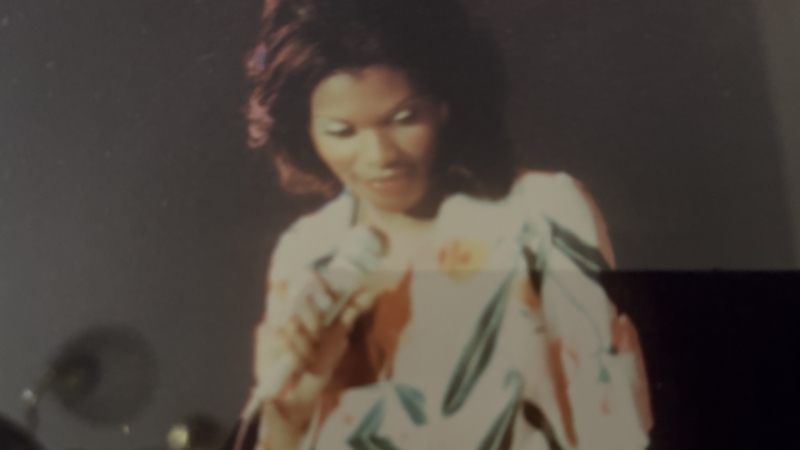 ON CRUISES WITH ALAN RUBENSMargie’s and Alan’s cooperation continued for some time still after the Live! project. Alan: “My label was WMOT Records. Margie was not on our label. Margie was on Atco, which was a label owned by Atlantic Records. After we did the Latin Casino project, we recorded four sides with Margie, which were meant for her next album, and then we turned them into Atco. I don’t think they put them out. Norman Harris produced those sides.” “In my opinion, considering Margie’s talent, she was being overlooked. They did not make her a priority, for whatever reason. I don’t want to blame anybody. I just thought that she was a lovely lady with tremendous talent. We thought we could help by doing some records on her. I don’t know what really happened, because we were not in control. Initially, I requested to work with her, because I had heard her voice on some records and I just thought this lady is phenomenal. She is the greatest female singer that I ever recorded with. I loved her voice and her singing ability. She’s a sweet, sweet, wonderful lady. I wished to make some records on her, and that’s how we got involved with Blue Magic and Major Harris.” After the Live! double album and those four shelved sides on Margie, the two didn’t work together anymore. In the early 1980s, WMOT ceased to exist. Alan: “We had a good run, but then we sold the assets. After that I worked with quite a few labels, like CBS Records. I got involved with other artists and had a production company. By that time, music had changed. The Sound of Philadelphia, which we were very much involved in, had kind of run its course – as far as radio and consumers’ taste, and people coming to Philadelphia to record. We had changed the sound to other things. Business changed in the 80s for a lot of us coming out of the Philadelphia area. I still had some success in Europe through the 80s, but in the States the music like on Live! At the Latin Casino was not in demand.” “Today I’m the Chief Operating Officer of a company called StarVista Live, which is a music theme cruise business. We charter big cruise ships for 2-3 000 passengers and we bring major entertainment onboard and relive some fabulous music and wonderful eras. I bring a lot of major talent that I know and worked with in the old days. In the 80s I worked with Rose Royce, LTD and numerous others onboard. We also book late 60s bands and a lot of English bands that I bring over. We do rock cruises, soul cruises and a flower power cruise. We do nine cruises a year – altogether nine weeks of cruises per year.” Among those 60s acts there are the Hollies, the Zombies, the Rascals, the Yardbirds, Herman’s Hermits, Peter Asher (of Peter & Gordon), the Family Stone (with Sly’s daughter running the band), Tommy James and the Shondells etc., and they all want to entertain the Flower Power fans. LAMONT DOZIEROne of Atlantic’s subsidiaries, Cotillion Records, existed from 1968 till 1986, and initially the label was established for blues and southern soul. However, later on it expanded to rock, gospel, and jazz as well, and subsequently still to disco. Among basic soul artists that they had in their roster there were Otis Clay, Darrell Banks, Brook Benton, Lou Johnson, C and the Shells, Baby Washington, Walter Jackson, Laura Lee, King Floyd, Tammi Lynn and Irma Thomas. All of them were not directly signed to the label but some appeared there for a short period through leasing, distributing or similar deals. After Cotillion’s hiatus without any releases from November 1972 to April 1976, the list continues with Luther (Vandross), Sister Sledge, John Edwards, the Impressions, Philippe Wynne, R.B. Hudmon, Wee Gee, C.L. Blast, Ronnie Dyson, Johnny Gill etc. – and Margie Joseph. After the revival of Cotillion Records in 1976, Henry Allen became the president. “When I was told that I would be leaving the major label, Henry Allen was chosen to be the person at Cotillion. I think he was the one that actually resurrected that subsidiary. He chose Lamont Dozier. I was a very big Motown fan and I can remember, when he said that Lamont would be producing this album, I just felt so blessed. Of course, having Arif Mardin I felt the same way, but it was a different feeling to know that I was going somewhat back to my childhood days to have the producer who did all the Motown hits.” “I was a starry-eyed girl, who didn’t pay attention to details, nor the business aspect of the entertainment field. I wanted to sing. I wanted to display my gift, and that’s what all of the producers gave me a chance to do. I considered Lamont the most challenging producer I had. He would push me. He didn’t accept any excuses or justifications. He was the kind of producer, who saw my potential. He knew I was young, and I do believe he had some type of history on how I had been overlooked and that I was probably well before my time. I just have that feeling, now in retrospect. Lamont really did put his all into this album. I think he wanted to give Henry an album on me that my fans could appreciate.” HEAR THE WORDS, FEEL THE FEELINGMargie’s Cotillion album Hear the Words, Feel the Feeling (1976) was recorded, mixed and mastered across four California studios: Kendun Recorders in Burbank, Crystal Sound in L.A., Devonshire Sound Studios in North Hollywood and ABC Recording Studios on Beverly Boulevard in L.A. Produced by Lamont Dozier, rhythm was arranged by him and his loyal partner, McKinley Jackson, who was engaged also in string and horn arrangements along with David Blumberg and Dale Warren. Among twenty musicians in these sessions, you can find such names as Ray Parker, Jr. and Lee Ritenour on guitars, Jerry Peters and John Barns on piano, Henry Davis on bass, Ed Greene, James Gadson and Ollie Brown on drums, Gary Coleman on percussions and Eddie “Bongo” Brown on congas. The Waters sisters and the Jones Girls are among background vocalists. Lamont wrote or co-wrote seven of the album’s nine songs, and most of them were earlier recorded either by him, or the Originals on their California Sunset album a year earlier on Motown. The title song – Hear the Words, Feel the Feeling - opens the album and it was also chosen for the first single off the album. Written by Lamont and McKinley, this memorable and impressive ballad hit # 18-soul in Billboard. “I think Lamont actually wrote that for me. That song was big in New Orleans.” A beautiful and bittersweet ballad on the flip called I Get Carried Away, written by Lamont’s brother, Reginald Dozier, and Althea Wylie, makes this disc a great double-sider. McKinley Jackson had produced this song for Freda Payne’s Payne and Pleasure album on ABC and it was released also as Freda’s single in July 1974. BMI shows that the co-writer was Althea King, and she just happens to be Richard “Popcorn” Wylie’s mother, so here you can draw your own conclusions. Another Dozier-Wylie song that first appeared on the Payne and Pleasure album and is included also on Margie’s LP is a melodic and infectious mid-pacer called Didn’t I Tell You. Reginald Dozier, also known as “the Mix Doctor”, has made his mark not only as a songwriter but also as a producer and recording engineer, and he was a Grammy Award winner. Unfortunately, he just passed on November 28 at the age of 83. DON’T TURN THE LIGHTS OFFA loping mid-tempo song named Don’t Turn the Lights Off was the second single off the album. Released in September 1976, it derives from the Originals’ California Sunset LP. Margie’s pleading delivery carried this single up to # 46-soul in Billboard. “My children love that song. I really would someday want to modify it to make it more updated. The rhythm, the track on it is awesome.” On the B-side there was Margie’s very slow and haunting “sigh of relief” called All Cried Out, which originates from Lamont’s Black Bach album two years earlier. The two up-tempo tracks on the album were scheduled to be included on Lamont’s Prophecy album in 1975, but the whole project went unissued. Those tracks became available only in 2000 on an Expansion CD titled The ABC Years and Lost Sessions (https://www.soulexpress.net/lamontdozier_discography.htm). Prophecy is a disco type of a dancer, while Something to Fall Back On is a more mellow mover. A melodic mid-tempo number with an enchanting orchestration called Why’d You Lie is the second song lifted from the Originals’ California Sunset album. One of the highlights on Margie’s album is Lamont’s beautiful and smooth ballad called Feeling My Way, which runs over six minutes but never falls into tediousness. On the contrary, it wraps you in its gentle flow and tenderly sweeping mood. “I think I did a remarkable job on Feeling My Way, the soul and the feeling of the song. I’m an old romanticist. I still believe in love, no matter how this world looks today. Every song on all of my albums tells you a story about love – how it hurts, how it makes you feel good, the loss of it. It’s all there.” Hear the Words, Feel the Feeling is a delightful and highly entertaining album. “I didn’t really have total 100 % privilege of choosing a lot of the songs. In fact, Lamont chose all of the songs (laughing), but every song would tell my story.” CHRISTMAS GIFTThere are still two more songs that Lamont Dozier composed and produced for Margie, an easily rolling mid-pacer named Christmas Gift and a pretty and melodic song called Feeling Like Christmas. “They were a special request by Henry Allen as part of the Christmas album for Atlantic. It is played devotedly every Christmas and I hear it everywhere in department stores and Walmart.” The album, Funky Christmas was released on the Cotillion label for the Christmas of 1976, and other artists on it included Luther, John Edwards, Willis Jackson, Lou Donaldson and the Impressions. Although not a commercial success, one significant purpose of the album was to promote Atlantic’s newer artists. As stated above, the song called Feeling My Way was one of the treasures on the album that Lomont Dozier produced, and now – surprise, surprise! – two years later the title of Margie’s next album is Feeling My Way, although there’s not a song by that name on display. “It’s because I thought it (the title) was so appropriate. I was being bounced all over, so I guess I was saying I’m just feeling my way” (laughing). 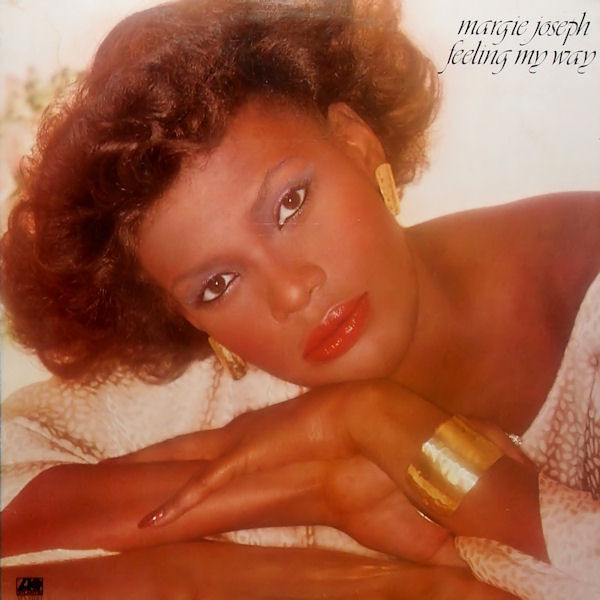 Margie had contacted the President of Atlantic Records at that point, Jerry Greenberg, and now she was back on the mother label, and moreover produced by another legend in music, Johnny Bristol. “I asked for him. When I started dating my second husband – I was married in 1976 – Johnny’s music in a way steered me, and I loved the way he conveyed the message of love in his music. Johnny didn’t give me much headway, because I found out that most of the songs on the album Johnny had recorded himself. It was like he was doing another Johnny Bristol album on Margie Joseph. But I’m grateful to Lamont and Johnny, because they gave me some wonderful songs, and I loved every one of them. And I enjoyed working with them.” Recorded at Davlen Sound Studios in North Hollywood, music was mainly arranged by Hense Powell and Sonny Burke. The rhythm section consisted of James Jamerson Jr. on bass, James Gadson on drums, Hense Powell and Larry Farrow on keys and David Williams, David T. Walker, Al McKay, Lee Ritenour and Mitch Holder on guitars. Backing vocals were provided by Deborah Tibbs, Lynda Evans and Maisha Grimes. LOVE TAKES TEARSJohnny wrote or co-wrote all ten songs on the album, and the taster single was released already in 1977. Come on Back to Me Lover (# 85-soul in Billboard) is a mid-tempo toe-tapper, a memorable song with a sharp rhythm. It was backed with He Came into My Life, which Johnny had released in 1976 on his Bristol’s Crème album. Margie turns this smooth song into a faster but nonetheless equally exhilarating version, and here you can also enjoy Ernie Watts’ fine sax playing. James Jamerson, Jr. is the co-writer on I Feel His Love Getting Stronger (# 94-soul), which is a bouncy mid-tempo song that was released as the second single in August 1978. How Will I Know on the B-side is a beautiful and gentle ballad and it was co-written by Robert Torres, who also plays percussion on most of the tracks and is listed as a production coordinator on the album. “How Will I Know is a song that nobody would want me to perform live, but I think that I would have done a great job on that thing, if I ever had been requested to sing it live.” The third single is a song, which should have been a hit – either for Johnny in 1975, when it first appeared on his Feeling the Magic album and was released as a single (alas, only # 72-soul), or by Margie, when her single was released in November 1978, or at the latest in 1982, when the Real Thing put out their version in 1982. The song in question was Johnny’s irresistible Love Takes Tears. Margie’s cover is funkier than Johnny’s original, but still quite thrilling – but no show on the charts. “Some things just weren’t meant to be. But love does take tears. All those songs on my albums are very relatable, applicable. If you love somebody, sometimes you have to love him enough to show that emotion. Love hurts.” Hense Powell co-wrote a hauntingly beautiful and sweet ballad names Picture of a Clown, which they put on the flip of Love Takes Tears. “Picture of a Clown makes me cry, because it’s applicable to the way my husband, Errol Bennett Sr, was, when I met him. Being a Vietnam war veteran, he’d gone through so much and he really didn’t have a lot to snarl about. You know how they treated veterans, when they came back from Vietnam… and some other problems in the military they had to face. I brought him the happiness that he needed in his life. I brought him the joy. We had two children, Erin and Errol Jr, and eight incredible grandchildren from this marriage.” Both the slow and emotional You Turned Me on to Love, and the downtempo but slightly faster I Love Talking ‘Bout Baby derive from Johnny’s Bristol’s Crème album, and especially on the latter one Margie’s delivery is strong. “It’s the theme song of that album. It’s a very popular song around my community. Especially children loved the way I sang that song, and the track on it is awesome.” “Johnny Bristol challenged me, because I don’t think he changed any keys in his songs. It was hard working sometimes. I was trying to deal with the protocol. I remember Smokey Robinson came by a couple of times and sat in on a session. He didn’t perform any music, but it was just great to know that Smokey was there sitting and enjoying the music. He’s very talented. Johnny was very serious. Once in a while you might get a smile out of him, but Johnny was there to work. He was good to me, but he had to work.” The ninth song on the album, All Good-Bye’s Aren’t Gone, is a ballad from Johnny’s Feeling the Magic album. This lilting beat-ballad is a smooth and captivating number and it leads to the tenth and last song on the album, a light dancer titled Discover Me (and You Will Discover You). Johnny had co-written and produced this song for Diana Ross and the Supremes on their 1969 album titled Let the Sunshine in. Feeling My Way closed Margie’s 1970s era at Atlantic – though she would later still return to the label. More about that and her four more albums and other activities in the final part of the story. Margie:“I really am humbled and grateful for all, who “saw” my gift and was a vessel used by the “Giver of Gifts” to open doors…THANK YOU!” DISCOGRAPHYSINGLES (Label / titles / # Billboard placings: soul/pop / year) Atco 6899) Come Back Charleston Blue (# 102-pop) / Donny Hathaway: Bossa Nova (1972) Note: The A-side: “Donny Hathaway with Margie Joseph” Atlantic 2907) Let’s Go Somewhere and Love / Born to Wander Atlantic 2933) Touch Your Woman / I’m So Glad I’m Your Woman Atlantic 2954) Let’s Stay Together (# 43 – soul) / I’d Rather Go Blind (1973) Atlantic 2988) Come Lay Some Lovin’ on Me (# 32 – soul) / Ridin’ High Atlantic 3032) My Love (# 10 – soul / # 69 – pop) / Sweet Surrender (1974) Atlantic 3220) Words (Are Impossible) (# 27 – soul / # 91 – pop) / (Strange) I Still Love You Atlantic 3269) I Can’t Move No Mountains / Just as Soon as the Feeling’s Over (1975) Atlantic 3290) Stay Still (# 34-soul) / Just as Soon as the Feeling’s Over Atco/WMOT 7030) What’s Come Over Me (# 11-soul) / You & Me (Got a Good Thing Going) Note: Margie Joseph & Blue Magic Cotillion 44201) Hear the Words, Feel the Feeling (# 18-soul) / I Get Carried Away (1976) Cotillion 44207) Don’t Turn the Lights off (# 46-soul) / All Cried Out Atlantic 3445) Come on Back to Me Lover (# 85 – soul) / He Came into My Life (1977) Atlantic 3509) I Feel His Love Getting Stronger (# 94 – soul) / How Will I Know (1978) Atlantic 3525) Love Takes Tears / Picture of a Clown ALBUMS MARGIE JOSEPH (Atlantic 7248; # 21-soul) 1973 I Been Down / Make Me Believe You’ll Stay / Let’s Stay Together / Turn Around And Love You / I’m Only A Woman / Lat’s Go Somewhere And Love // You Better Know It / Touch Your Woman / I’ll Take Care Of You / I’m So Glad I’m Your Woman / How Do You Spell Love / I’d Rather Go Blind SWEET SURRENDER (Atlantic 7277; # 56-soul / # 165-pop) 1974 Come Lay Some Lovin’ On Me / (Strange) I Still Love You / Come With Me / Baby I’m-A Want You / To Know You Is To Love You // If I’m Still Around Tomorrow / My Love / Ridin’ High / He’s Got A Way / Sweet Surrender MARGIE (Atlantic 18126; # 53-soul) 1975 Sign Of The Times / Believe In Humanity / The Same Love That Made Me Laugh / Who Gets Your Love / Promise Me Your Love / If You Walked Away // Stay Still / After All This Time / Words (Are Impossible) / Just As Soon As The Feeling’s Over / I Can’t Move No Mountains LIVE!(WMOT, WM2-5000) 1976 Blue Magic, Major Harris, Margie Joseph: I Love Music / Margie Joseph: Feelings / Margie Joseph: Ridin’ High / Margie Joseph: My Love / Major Harris, Margie Joseph: You’re A Special Part Of Me / Margie Joseph, Blue Magic: What’s Come Over Me / Margie Joseph, Blue Magic: I’m Gonna Make You Love Me / Margie Joseph, Blue Magic: Funny Guy, Funny Girl, Funny Love Note: Above are listed only the tracks that Margie is on HEAR THE WORDS, FEEL THE FEELING (Cotillion 9906; # 38-soul) 1976 Hear The Words, Feel The Feeling / Didn’t I Tell You / Why’d You Lie / Prophecy // All Cried Out / Something To Fall Back On / Don’t Turn The Lights Off / Feeling My Way / I Get Carried Away FUNKY CHRISTMAS (Cotillion 9911) 1976 Margie Joseph: Christmas Gift / Feeling Like Christmas FEELING MY WAY (Atlantic 19182) 1978 I Feel His Love Getting Stronger / Come On Back To Me Lover / You Turned Me On To Love / I Love Talking ‘Bout Baby / He Came Into My Life // Picture Of A Clown / How Will I Know / Love Takes Tears / All Good-Bye’s Aren’t Gone / Discover Me (And You Will Discover You) (The second interview with Margie conducted on September the 15th; acknowledgements also to Alan Rubens – interview conducted on January 8 in 2026 - and additional source: the book What’d I Say – The Atlantic Story by Ahmet Ertegun). © Heikki Suosalo Back to Deep Soul Main Page Back to our home page |
