PRINCE PHILLIP MITCHELL – THE SONGWRITERPART II (1970 - 1976) Prince Phillip Mitchell at Porretta Soul Festival, 2015 (Photo by Heikki Suosalo) Prince Phillip Mitchell’s career in the 1960s had been chequered, to say the least. He had fronted as many as eight different groups as well as performed solo. Phillip Mitchell: “The sixties was a very special time to be in the music industry. There was so much diversity and so many artists expressing themselves in their own unique way, unlike today where all the artists sound alike and lack originality and creativity. Consequently that era of music had a very profound impact on me personally as a young aspiring singer-songwriter.” In 1970 Phillip had returned to Muscle Shoals, where former Muscle Shoals rhythm section members Jimmy Johnson (rhythm guitar), David Hood (bass), Barry Beckett (piano) and Roger Hawkins (drums) had quit Fame and formed a new independent company called the Muscle Shoals Sound Studios, Inc. a year earlier. Jimmy was the president and Roger secretary-treasurer. The foursome also established The Muscle Shoals Sound label and a publishing company together with Terry Woodford and George Soulé. The owners of another new publishing company by the name of Formula were Jimmy, David, Barry, Roger and... Prince Phillip Mitchell.  The Muscle Shoals Rhythm Section with Wilson Pickett, photo courtesy of Jimmy Johnson Jimmy Johnson: “Terry Woodford ran our Muscle Shoals Sound Publishing and he came to us saying that he wanted to sign Phillip to a writer’s agreement. Terry was real influenced with his writing, and as a publisher at that point that was our total interest in the beginning. We signed him and put him on salary. He was doing demos for publishing.” Phillip signed a writer’s contract in April 1970, but nevertheless also his next two solo singles were recorded at the Muscle Shoals Sound Studios and leased to Bang/Shout Records. Phillip: “Barry and Terry produced them and they made the deal.” Written by Phillip and released in September 1970 on Shout Records, Free for All (Winner Takes All) is a quick-tempo, joyous dancer, which evolved into a northern soul favourite. In the U.K. it was released in February 1972 on Jay Boy (57), a subsidiary of President Records. The flip was another Mitchell composition called Flower Child, which again is a horn-heavy, moving dancer with a ripping sax solo in the middle but lacking the irresistible drive of the A-side. Phillip’s second Shout single, the soulful I’m Gonna Build California from All over the World is a melodic mid-tempo, self-written song and the flip, The World Needs More People like You, is a similarly paced, positive and more poppy ditty. Jackie Ross covered the song as a mellow ballad in 1980 on Golden Ear Records. Again produced by Barry Beckett and Terry Woodford, Phillip’s single came out in June 1971 and already two months later it was released in the U.K. (Jay Boy 37). In other words, in the U.K. Free for All was released as a follow-up to California. Incidentally, Barry Beckett and Roger Hawkins re-recorded Free for All on Mel & Tim two years later. Phillip: “It was a very delightful experience working with Barry Beckett and Roger Hawkins on the Shout recordings. These are still some of my favourite recordings.” STARTING ALL OVER AGAINThose days Phillip wrote songs after songs after songs, and many of them turned into hits, which people cherish still today. One of the most memorable tunes and also financially the most rewarding for Phillip was Starting All over Again, a hit for cousins Melvin McArthur Hardin and Hubert Timothy McPherson – aka Mel & Tim – on Stax in 1972 (# 4-soul, # 19-hot). The song was later covered by numerous artists - Daryl Hall & John Oates, Clarence Carter, Don Gibson, Bobby Bland, Al Green, Johnnie Taylor, Paul Jones, Nat Brown, James Govan & Sandra Wright, Randy Crawford, Gwen McCrae etc. – but originally it was written for Sam & Dave and their punchier cut from 1971 was released only in 1993 on a Rhino Records anthology. Phillip also co-wrote with Ernie Shelby Mel & Tim’s follow-up hit, I May Not Be What You Want (# 33 / # 113), and almost all the tracks on their self-titled 1973 album, including such beautiful and soothing ballads as Same Folk, Oh How I Love You, It’s Those Little Things That Count, Ain’t No Love in My Life and That’s the Way I Want to Live My Life. Phillip: “I thought Mel and Tim were two very talented, two easy going type of guys that seemed to masterfully compliment each other vocally.” Stax was interested in not only leasing Phillip’s songs, but also in trying to make him work for their company. Phillip: “I found out about that later. I didn’t know that at the time. Jimmy Johnson called me in the office one day and asked me what I thought about Stax Records. I said ‘Stax is cool’. He said ‘they’re trying to buy your contract and I told them flat out no’. I never heard much more about it.”  William Bell in 2008, photo by Pertti Nurmi THE SAME FOLKSPhillip’s next recording stopover for two years was located not far away from Stax, as he signed with Hi Records in Memphis. “Willie was interested in recording me. My management agency was Continental Artists in Memphis - Bettye Berger - and they connected me with Willie Mitchell over at Hi.” Born in 1930, Bettye Berger started her career in music business at the WHER radio station in Memphis in 1957, wrote a few songs and established a record label called Bet.. T Records, which among other things released two songs by the Del Rios – Heavenly Angel / Dangerous Lover – led and written by William Bell. She also co-owned a nightclub called the Plantation Inn in West Memphis, Arkansas. Besides William Bell and Phillip Mitchell, Continental Artists, Inc. represented since its foundation in 1966 Charlie Rich, Ivory Joe Hunter, the Bar-Kays, Geater Davis, Al Green, Isaac Hayes, Luther Ingram, the Soul Children, the Staple Singers, Carla Thomas, the Emotions, the Detroit Emeralds and numerous others. “Bettye was absolutely nuts. She was funny. She was just a happy spirited person all the time.” One essential fact in the music history is that Bettye once dated Elvis Presley in 1956. Phillip Mitchell’s first single on Hi was produced by Willie Mitchell and released in September 1972. Written by Phillip, Little Things is a nice mid-tempo song built on a typical Hi beat, and under the title of It’s Those Little Things That Count it was also recorded by Mel & Tim, John Edwards and the Artistics. On the flip there’s a deep soul ballad intensified still by Phillip’s soaring falsetto titled That’s What a Man Is For, but the song is credited to Bettye Berger. “I actually wrote that too, but Bettye wanted the publishing on that, so I just gave it to her.” The single didn’t make the charts. “Nick Pesce, who was the owner of Hi Records, was so excited about it, but they did not promote it.” The follow-up was both written and produced by Phillip. Oh How I Love You is a smooth and soulful ballad, but again it missed the charts, which is a shame, because it really is a heartfelt, beautiful song. It definitely deserved better. Again Mel & Tim covered it and Tamiko Jones turned it into a light dancer two years later. The melodic and equally haunting The Same Folks That Put You There makes this single a great double-sider... and yes! - Mel & Tim recorded this floater, too. A hypnotic toe-tapper called Ain’t No Love in My Life became the third no-show on the charts in a row, and – you guessed it! – the song was included on Mel & Tim’s second album, too. However, here it must be pointed out that Phillip himself cut all these songs first. Both sides of this third Hi single were written and produced by Phillip and Turning over the Ground on the flip is like a standard Al Green mid-tempo pounder, even up to vocal similarities. “With those same musicians and the studio, everybody’s going to sound like Al Green. It was just the style of those musicians, no matter who you were. If you were Lou Rawls and recorded at Hi, you would sound like Al Green. I got the feel from Willie Mitchell that he was there and not there. He always had this curious face. He looks just like my dad, and I didn’t know if he was joking or serious or what... but he was great to work with.” 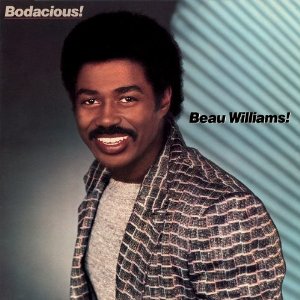 BOBOBesides himself, those days Phillip produced also a couple of other artists, including one Bobo Mr. Soul, later better known as Beau Williams. “I met Beau in Houston, when I went out there to play with the Esquires band from Muscle Shoals. I was having a break at one club and this guy, Fred Garvey, comes up to me and says ‘I just want to tell you that you look really sharp, where you from?’ I said ‘from Louisville, Kentucky’, and he says ‘yeah, I can tell, I knew you were from there. Have you heard of Bobo?’ ‘No, I’m just new in Houston. I’m just walking around and checking out the area’. He said ‘we’re doing a big jam session here every second Sunday. All the musicians come from all over Houston to sit in’. I said ‘I sing a little bit, too’, and he said ‘okay man, I look at you and can tell you that you can’t sing. You don’t look like a singer’” (laughing). “Fred had gone up and signed my name up on the list to come up and sing. He didn’t tell me about it. After Fred sang, the band calls me up to sing. I sang Danny Boy, and while I was singing Bobo walks into the building, and this is how I got to meet him, and we became good friends.” Bobo’s first single in 1971, a dancer titled Answer to the Want Ads, was released on the Ovide label out of Houston, Texas. His follow-up and another northern favourite, Hitchhike to Heartbreak Road (Ovide 258), was produced and written by Phillip in 1972. Phillip had first cut it on Curtis Wiggins, a member of his Checkmates band in the early 60s, but then he replaced Curtis’ voice with Bobo’s and even had this catchy dancer re-released on Hi Records (2225). Later Beau Williams signed with Capitol in the early 80s, released three albums and had three small single hits with You Are the One (# 64-black), There’s Just Something about You (# 38) and All Because of You (# 94) between 1984 and ’87. Since the late 80s he’s been active in the gospel field, released many records and lives back in Houston these days.  ARCHIE BELLThe most notable artist on Skipper Lee Frasier’s Ovide label was Archie Bell & the Drells, and Skipper acted as their manager, too. Actually Archie’s Tighten Up – backed by the uncredited TSU Toronadoes - was first released on Ovide in 1967 and then leased to Atlantic, where it evolved into a gold record next year. “I first met Archie in Houston. I was singing around town, different places, and I got to be a pretty big name around Houston. A lot of these guys were coming out to see my show and Skipper Lee Frasier, who was a local deejay on KHOC radio station, called me and I had a meeting with him. Archie was in the army and he had this big record, so Skipper asked me if I would front the group until Archie gets out of the army. I said that I don’t want to do group things, but he knew that I was a songwriter. Later on, when I was in Muscle Shoals, Skipper called me and asked me if I would produce Archie Bell and the Drells for them, and I agreed.” Among those Archie’s songs that were cut at Muscle Shoals in 1970, produced by Brad Shapiro and Dave Crawford, written by Phillip and released on Atlantic were two soul ballads, I Wish and I Just Want to Fall in Love and a jolly mid-pacer called Archie’s in Love. Of the six sides that Archie released on the Glades label in 1973, Phillip wrote and produced four. Two of them charted, a smooth dancer titled Dancing to Your Music (Glades 1707; # 11-soul, # 61-hot) and a double-sider consisting of a punchier dancer named Ain’t Nothing for a Man in Love and the mid-tempo You Never Know What’s on a Woman’s Mind (Glades 1711; # 36-soul), later covered by the Magnificents Band for the beach music market. The fourth one was Girls Grow up Faster than Boys (Glades 1718), a smooth down-tempo song. “Archie Bell is one of my dearest friends and we speak often.” THERE’S ANOTHER IN MY LIFEPhillip’s next single appeared on Event Records, which was a subsidiary of Spring Records, owned by Roy and Julie Rifkind. Event was founded in 1968 and it operated out of New York for about ten years. Some of the other acts on the label included Fatback Band, Ronnie Walker and Jay & the Techniques. “I got to Event/Spring through Brad Shapiro.” A plaintive ballad with an opening monologue titled There’s another in My Life became Phillip’s first charted record, when it climbed up to # 58 on Billboard’s “Hot Soul Singles” charts in early 1975. Produced by Brad Shapiro, Phillip co-wrote the song with Billy Clements. “Billy Clements is probably the best bass guitar player that ever lived. He’s a jazz guitarist. I met him, when I was like 14-15 years old, and he used to play with a big band out of Lexington, Kentucky, called the House Rockers. I nick-named him ‘Clem The Magnificent’. I compare him with the likes of George Benson, Earl Klugh and Norman Brown. Billy was stricken with polio as a child and never let his disability stop or slow him down. He’s one of my best friends in the whole world and is highly respected among guitarists worldwide. Billy still plays locally.” A CD entitled The Great Billy Clements was released in 2014 on BWJ Records. “Billy played a lot on my demo tracks at Muscle Shoals. I would bring him in and out when I write a new song, and we wrote a couple of songs together.” Among those collaborations there are Forever and a Day recorded by Mel & Tim, You Gotta Come Through Me by Garland Green (unissued at the time), I’d Still Be There by Joe Simon, When Can We Do This Again by Z.Z. Hill and Jesse James a few years later, I’m Tired of Hiding and Bad Risk by Millie Jackson and the deep and powerful Be Strong Enough to Hold On by Bettye Swann, Dorothy Moore and Z.Z. Hill. There were also songs that no artist presumably picked up at the time, such as It Don’t Hurt Me, I’m So Glad, I Wish It Was a Lie and I Understand. The B-side to Phillip’s Event single, There’s another in My Life, is a mid-tempo funk called If We Get Caught, I Don’t Know You, written by Phillip, Billy and K. Sterling. “That’s Brad Shapiro. He didn’t write anything on it. He might have a line or something that he had me put in it, so that he’d get a part of it.” Billy and Phillip wrote and Phillip recorded for Event still one semi-psychedelic track – possibly inspired by the Temptations - named I’ll See You in Hell First, but it was canned and first released only in 1990 on a U.K. Southbound compilation entitled Safe Soul Volume 1 (CDSEW 020), and later it has appeared on a couple of other Ace compilations.  Muscle Shoals Studios in 2000, photo taken by Heikki Suosalo MUSCLE SHOALS DEMOSPhillip: “I was still signed to Muscle Shoals Sound Publishing Company while I was an artist with Hi Records. Most of my demos were recorded at Muscle Shoals Sound Studios, maybe one or two might have been recorded at Widget, but I never recorded anything at Quinvy Studios. All these songs (below) were recorded between 1970 and 1975.” Widget Studios were located at 3804 Jackson Highway in Sheffield, Alabama, while the address of the MSS Studios was 3614 Jackson Highway, so they were situated not far away from each other. Jimmy Johnson: “Widget was down the street. A guy named Ronnie Ballew owned it. I went to school with Ronnie. He was not a musician, but I think when he saw things happening with us in the music industry, he decided he wanted to do it too. Widget was smaller than ours. We weren’t twice as big, but we were bigger.” A little over ten years ago Grapevine Records in the U.K. released altogether forty demos that Phillip cut at Muscle Shoals in the first half of the 1970s. Those two CDs – Just the Beginning (in 2004) and Pick Hit of the Week (2005) – were compiled by Phillip and Garry J. Cape. In his liner notes Paul Mooney rightly points out that Phillip was a songwriter extraordinaire, whose own recording career suffered from the fact that he was too valuable as a composer.  Paul also notes that in terms of writing songs, Phillip was earlier influenced by Smokey Robinson. Phillip: “I thought Smokey was Jesus. When I got into the Motown era, like everybody else I thought ‘wow’. The music was absolutely fabulous and this Smokey Robinson guy – he’s the man. For sure, he was one of my inspirations.” Backed for the most part by those Muscle Shoals wizards - Jimmy, Barry, Roger and David – with guests, all these recordings were dug out of Malaco’s vaults and most of them sound more like finished tracks than sparsely cut demos. Phillip: “A lot of the stuff that I write is just an idea. It can be something that I see in somebody else’s situation, and a lot of what I write is not even related to me personally. When I was in Muscle Shoals, we would do – what they call – assignment writing. They would have a certain particular artist coming in to record and Jimmy or somebody would ask me to write for that artist.” Jimmy: “Those were demonstration recordings that we would use to try to get somebody interested in the songs. It wasn’t released to get airplay. That wasn’t really the purpose of demo. We played on all of the master cuts that we recorded and since we played on our demos, those demos were exceptionally good.” Among those demos there were a few that Bobby Womack would record. Phillip: “Bobby Womack was a friend of mine, and Bobby had one of the most creative minds of any artist that I’ve ever met; a superb stylist with all the required attributes, and a natural knack that made him one of the greatest soul singers to ever grace the earth.” Something for My Head and Home Is Where the Heart Is are both uptempo cuts, whereas If You Can’t Give Her Love, Give Her Up is a ballad. The last song was co-written by Clayton Ivey. “Clayton Ivey is a masterful pianist that I loved recording with in Muscle Shoals. This song was recorded by Bobby Womack and as a duo with Bobby & Mary Wells.” The latter version was released on Reprise in 1974, one year after Bobby’s original. MILLIE JACKSON and JOE SIMONBesides Starting All over Again, another impressive and popular song that Phillip wrote in the early 70s was It Hurts So Good. This ballad was written for Katie Love and the Four Shades of Black and released first on Muscle Shoals Sound Records in 1971 and re-released on Scepter, but it became a hit only two years later, when Millie Jackson covered it and turned it into the biggest single of her career (Spring 139; # 3-soul / # 24-hot). It was also featured in a film called Cleopatra Jones and Susan Cadogan and Lee Perry introduced the song to reggae music fans.  “Millie Jackson is also a friend and one of my favourite artists whom I’ve written for. She has this bubbly personality and uncanny sense of humour that keeps everybody she meets in stitches.” Millie recorded quite a few of Phillip’s songs – mostly ballads, but also a couple of funky numbers - on such albums as I Got To Try It One Time in 1974 (Get Your Love Right and I Gotta Do Something about Myself), Caught Up in 1974 (So Easy Going, So Hard Coming Back) and Still Caught Up in 1975 (You Can’t Stand the Thought and Leftovers). Still in the 80s she recorded such soul ballads as Somebody’s Love Died Here Last Night for the I Had to Say It album in 1980 and I Need to Be by Myself for An Imitation of Love in 1986. Phillip co-wrote the latter ballad with Jolyon Skinner and Jonathan Butler. On those two Grapevine CDs there are as many as four songs that Joe Simon picked up. Released in 1974 and co-written by Billy Clements, I Would Still Be There is a pretty country-tinged ballad, whereas What We Gonna Do Now is a more mid-tempo number. The slow and intense It Be’s That Way Sometimes came out a year later, and this dramatic song was covered also by Denise LaSalle in 1986. Joe still turned Going through These Changes into a mellow dancer in 1979 (# 78-soul). Besides Mel & Time, the melodic and positive Carry Me was cut at least by Joe Simon, Marilyn McCoo & Billy Davis, Jr. and Desmond Dekker. That sing-along mid-pacer was co-written by Ernie Shelby, who also recorded it himself on Polydor in 1972. “I first met Ernie Shelby, when I lived in Los Angeles, California, and we became friends. Ernie was trying to get into A&M Records as a songwriter. He introduced me to some people at A&M and they said that they had heard of my songwriting skills and told Ernie to come back to Muscle Shoals with me and learn how to write soul music, and he did just that. We penned Hole in the Bottom of the Bucket, Carry Me, I May Not Be What You Want and Love among People. I normally don’t like to collaborate with other writers, because I write very fast and most of the time they slow me down. However, it was a great and pleasurable experience for me to write with Ernie. He was a very musical and quite creative and had a very unique voice.” Percy Sledge and Carla Thomas recorded the slow and tuneful Love among People. One more song that Joe Simon recorded in 1973 was a beautiful ballad named Love Never Hurt Nobody. “Joe Simon and Roy Rifkind of Spring Records flew me to New York City to write the lyrics to a track that Joe Simon had recorded. I spent the night at Joe Simon’s apartment and stayed up the whole night writing lyrics to I Need You, You Need Me, while Simon slept. The next morning when I awoke, Joe Simon was gone and so was the lyrics that I had spent the night writing. I caught a cab over to Spring Records that morning and asked Roy Rifkind where was Joe Simon and was told he had taken an early flight out to New Orleans, and I have never seen nor heard from Joe Simon since. When the record finally came out, there were several writers’ names credited but mine was not one of them. Consequently he and the Rifkinds literally stole my song.” I Need You, You Need Me was released on Spring in late 1975, it hit # 5 on Billboard’s “Hot Soul Singles” charts and was credited to Joe Simon, Raeford Gerald and Billy Kennedy.  CANDI, PERCY and THE STAPLESCandi Staton took a powerful downtempo song titled Here I Am Again onto the charts in 1975 (# 35-soul; on Warner), but Ollie Nightingale had recorded the song on Pride already back in 1972. Another significant song that was chosen for Candi was a funky dancer called As Long As He Takes Care of Home, which was an even bigger hit for her in 1974 (# 6-soul / # 51-hot) and in 2000 it was revived by Pat Brown. Both of those songs were included on the Candi album in 1974, as well as the gritty Can’t Stop Being Your Fool. A later release, He’s Making Love to You, is a melancholic and touching ballad. “Candi Staton I met briefly at Fame Studios long before she ever recorded any of my music, and she probably wouldn’t remember even meeting me.” “Percy Sledge was another friend that I admired very much because of his natural ability to sing R&B, and yet be as country as Fatback and Collard Greens. I replaced Percy Sledge as lead vocalist with his former band the Esquires, when he went on tour for the first time after recording When a Man Loves a Woman, which was written by Calvin Lewis (bassist) and Andrew Wright (pianist), both of the Esquires band. The songs I wrote for Percy were That’s the Way I Want to Live My Life and I Believe in You.” The slow That’s the Way... was released on Atlantic in 1971 and it was covered by both Mel & Tim and Tommie Lee two years later, whereas the mid-tempo I Believe in You appeared on Percy’s I’ll Be Your Everything album in 1974. The Staple Singers recorded one of Phillip’s early 70s demos, a mid-tempo number titled Trippin’ on Your Love, as late as in 1981 as well as a high-quality ballad named When It Rains It Pours, but their most successful joint effort was the driving Oh La De Da on Stax in 1973 (# 4-soul / # 33-hot). “Upon meeting the Staple Singers I was blown away, because they were just like meeting a part of my family that I never knew I had. Cleo and Mavis called everybody “Montana”, which made everyone laugh. They were so funny and down to earth. As a matter of fact, Pops wanted me to come on the road and perform with them to take the place of Pervis Staples.”  JOHN, COREY, SIDNEY...Both John Edwards and Corey aka Cicero Blake recorded a fast and light dancer called How Can I Go on without You, but only Corey’s single was released on Capitol in 1975. John’s Aware recording came out only on a Kent CD entitled Careful Man in 1996, as well as his reading of the mid-tempo Cold Hearted Woman. Al Mason’s I Can’t Go on without You, which was released in 1994 on Washington Hit Makers, is the same song. “I never had the pleasure of meeting John Edwards. However, I think he’s quite an amazing vocalist with all the ingredients to be mentioned amongst the best.” Another fast dancer was I Don’t Do This (To Every Girl I Meet), which Sidney Joe Qualls recorded for Chi-Sound in 1979, and the mid-tempo I Need Your Love was cut by the Patterson Twins – Estus and Lester – for Malaco in 1976. A mid-tempo song titled Just the Beginning was meant for the Rowan Brothers, and Phillip re-cut this song on himself later. “The Rowan Brothers – Lamont and Duane – used to sing backup for me locally in the clubs here in Louisville and worked with me for about three years. I was also their choreographer and vocal coach. After winning first place in the Louisville Expo in 1977, I decided to take them down to Muscle Shoals and record them. I did write Just the Beginning and several other songs especially for them, but to my knowledge I don’t believe they did any other recordings other than maybe some gospel recordings locally.” Among those demos that nobody picked up to record, as far as we’re aware, there were not only touching and poignant ballads - If We Can’t Be Lovers, Losing You Has Taught Me a Lesson, Look at Me Laughing - but also tuneful and catchy dancers, such as Sweet Passionate Love, Here, Take the Key to My Heart and Make Yourself at Home. One ballad called Hangin’ on by a Thread was co-written with Howard Brown. “Howard Brown I know nothing about except Terry Woodford asked me to help him write the lyrics to a song Howard had written called Hangin’ on by a Thread. As I recall it was very odd and awkward type song that had a very strange melody form. I made a brief, half-hearted attempt to make a demo of it... it sounded terrible.” The gorgeous Me Myself and I is actually a deep soul ballad. “Graham Dee is a very dear friend of mine. Graham and I wrote Me Myself & I together, when he first came over to Muscle Shoals from England back in the seventies. That’s him singing along with me and playing the guitar. I recently re-united with Graham last year in Cheshire England after forty-five years. It was great to see him again and we had a great time reminiscing.” CHARLES SMITH & OTHERSThere’s still a long line of artists that benefitted from Phillip’s writing skills. One of them is a southern soul singer by the name of Charles Smith, who had three Phillip’s deep ballads on a Soulscape compilation called Ashes to Ashes in 2011. Please read my review at http://www.soulexpress.net/deep1_2012.htm#charlessmith. Unfortunately, all three – I Want to Love You, Walk Slow and The Only Time You Say You Love Me - were left in the can at the time. Besides Charles, the last song was cut also at least by the Patterson Singers (in 1972), Cissy Houston (’73). Dorothy Moore (‘76) and Ralph MacDonald (’76). Mavis Staples’ and Bettye Swann’s fine versions were unearthed later. “Charles Smith is a friend of mine and I know him quite well. Upon first arriving in Muscle Shoals, Alabama, I performed with Charles Smith and Jefferson Cooper in a band called the Invaders. Charles Smith is a very gracious, soft spoken and God-fearing man of which I have great respect.” Ace/Kent in the U.K. released in 2013 a CD compilation titled Something New to Do: The Phillip Mitchell Songbook (see the discography below), featuring 23 of Phillip’s songs interpreted by various artists including Phillip himself on his Hi track, Little Things. Among those that have not been mentioned above there are the slow and heartfelt You Made Me What I Am by Erma Coffee (on Hi Records in 1973), the vibrant Something New To Do by Bobby Sheen (on WB in 1973), the pulsating A Star in the Ghetto by Average White Band with Ben E. King (on Atlantic in ’77; # 25-soul) and the funky Gonna Have a Murder on Your Hands by J.J. Williams (on Capitol in 1972), which Little Milton covered twelve years later. Let us still examine some of Phillip’s outstanding songs that either southern or mainstream soul artists picked up. A powerful ballad named Somebody’s Gonna Get Hurt with a fully orchestrated background inspires William Bell into a dynamic performance on his third Stax album called Wow... in 1971. L.V. Johnson’s single Don’t Cha Mess with My Money, My Honey or My Woman, on Volt in 1971 is an irresistible mid-tempo toe-tapper, produced by the late Don Davis. The Emotions included a sweet and soulful ballad called Tricks Were Made for Kids on their 1972 Volt album Untouched, whereas Phillip’s and Billy Clements’ smooth and nice dancer titled Last of the Red Hot Lovers was chosen for Major Lance and released as the B-side to his Playboy single in 1974. Although on Barbara Mason’s ballad hit Shackin’ Up (on Buddah in 1975; # 9-soul / # 91-hot) only J(ackie) Avery is credited, nevertheless Phillip is the co-writer. Garnet Mimms’ GSF single Somebody, Someplace in 1972 is a punchy dancer, whereas Lanier & Co’s After I Cry Tonight (# 26-black / # 48-hot) on Larc ten years later is a plaintive and beautiful ballad. Still on Malaco Records in the mid-80s Denise LaSalle cut the sensual Come to Bed and Latimore delighted us with a catchy ditty named She’s all that.  GOLDMINE FOR SAMPLERSAt BMI Phillip Mitchell has as many as 311 song titles registered. Considering that he composed many timeless tunes and hard-grooving numbers, he’s one of the most sampled writers. Among those hip-hop generation music makers that have sampled Phillip’s material we can list at least Raptile (Falling from Heaven), Major Stress (You’ll Throw Bricks at Him), Chuuwee and Cookin’ Soul (Make It Good), Bun B & Mddl Fngz (Let’s Get Wet), the P Brothers (You’ll Throw Bricks at Him), Snoop Dogg (Make it Good), Evidence (The Same Folks that Put You There), Murs and 9th Wonder (Paying the Price), N.W.A. (Star in the Ghetto) and Kanye West (If We Can’t Be Lovers). “Other rappers that have sampled my music include Fifty Cents (Magic Stick), Tarik (If We Can’t Be Lovers), Solange Knowles (If We Can’t Be Lovers), Cka Chan (Star in the Ghetto), Guy (Star in the Ghetto), O.F.T.B. (Star in the Ghetto), Cam’ron & Julez and various others.” Among “2005 BMI Pop Music Awards” winners there was Phillip’s Magic Stick by Kimberly “Lil’ Kim” Jones.  Jimmy Johnson, David Hood, Barry Beckett and Roger Hawkins - photo courtesy of Jimmy Johnson 3614 JACKSON HIGHWAY TODAYJimmy Johnson: “Actually The Muscle Shoals Music Foundation has bought that building. This happened about two or three years ago. Jimmy Iovine and his partners in an earphone company Beats came to us. They had seen the movie on Muscle Shoals and they decided they want to donate a million dollars to preserve 3614 Jackson Highway, because the studio was really going down. Then they sold their company to Apple for three billion, and during that deal Apple then took over the promise. Right now it’s in the final stages of being renovated. All of the recording equipment has been taken out years ago and now they’re working to get the studio back in working quality, and it’s going to be recording again.” “Actually they’re going to keep the ambience of the old building, but they had to do a lot of restructuring in the roof and to keep the building from falling down (laughing). It’s being reconstructed, but it still has a lot of similarity, the same look it had when we had it. Functionally that studio was one of the better studios in the country.” Jimmy keeps himself busy still today. “I still produce. I’m doing a project now with a guy named Michael Curtis. It’s basically a Muscle Shoals R&B type album with some country overtones” - (www.jimmyjohnsonmusic.com). “Phillip Mitchell was very dear to our heart for a lot of years. Just to show how we felt about him, we gave him a Lincoln Continental car after third or fourth year he was with us. As a matter of fact, at one point we all lived in Muscle Shoals, and me and Roger and Phillip lived in the same Chateau Orleans apartment complex. He was my neighbour. We were really close... and we were also night birds.” In the third and final part of the Prince Phillip Mitchell story we’ll concentrate on his recorded music on such labels as Buddah, Atlantic, Ichiban, 3rd Dynasty Records and a couple of others. DISCOGRAPHY
SINGLES (label # / titles / Billboard # soul or black/hot / year) SHOUT 244) Free for All (Winner Takes All) / Flower Child (1970) 246) I’m Gonna Build California from All over the World / The World Needs More People like You (1971) HI 2221) Little Things / That’s What A Man Is For (1972) 2240) Oh How I Love You / The Same Folks That Put You There (1973) 2258) Ain’t No Love In My Life / Turning Over The Ground EVENT 223) There’s Another In My Life (# 58 / -) / If We Get Caught, I Don’t Know You (1975) ALBUMS(title / label # / Billboard # soul or black/pop / year) JUST THE BEGINNING (Grapevine, GVCD 3012) 2004 – an U.K. compilation of Phillip’s demos Just The Beginning / Going Through These Changes / Be Strong Enough To Hold On / Something For The Head / If We Can’t Be Lovers / Here I Am Again / Sweet Passionate Love / Home Is Where The Heart Is / I Need Your Love / Doin’ Alright / You Gotta Come Through Me / How Can I Go On Without You / It Don’t Hurt Me / Hangin’ On By A Thread / If You Can’t Give Her Love, Give Her Up / Here, Take The Key To My Heart / Love’s Getting The Best Of Me / Beautiful Things Always Happen / Make Yourself At Home / Trippin’ On Your Love PICK HIT OF THE WEEK (Grapevine, GVCD 3021) 2005 – see above Pick Hit Of The Week / Losing You (Has Taught Me A Lesson) / Free For All / Look At Me Laughing / It Be’s That Way Sometimes / First Lady Of The Universe / I’m So Glad / I May Not Be What You Want / Once You Love Someone / I Wish It Was A Lie / Sad Sad Melody / I Don’t Do This (To Every Girl I Meet) / Me Myself And I / Ready If I Don’t Get To Go / I Understand / What We Gonna Do Now / I’d Still Be There / The More I Get, The More I Want / It Hurts So Good / Losing You VARIOUS ARTISTS: SOMETHING NEW TO DO: THE PHILLIP MITCHELL SONGBOOK (Kent, CDKEND 394) 2013 – an U.K. compilation John Edwards: Cold Hearted Woman / Mel & Tim: Free For All (Winner Takes All) / Garland Green: (You Gotta) Come Through Me / Ernie Shelby: Carry Me / Sidney Joe Quails: I Don’t Do This (To Every Girl I Meet) / Joe Simon: It Be’s That Way Sometime / Archie Bell & The Drells: Archie’s In Love / Bobby Womack: Something For My Head / Erma Coffee: You Made Me What I Am / J.J. Williams: Gonna Have A Murder On Your Hands / Phillip Mitchell: Little Things / Katie Love & The Four Shades Of Black: It Hurts So Good / Mary Wells: If You Can’t Give Her Love (Give Her Up) / Johnnie Taylor: Starting All Over Again / The Staple Singers: Trippin’ On Your Love / Bobo Mr. Soul: Hitch Hiking To Heartbreak Road / Candi Staton: Here I Am Again / Bobby Sheen: Something New To Do / Dorothy Moore: The Only Time You Say Ever You Love Me (Is When We’re Making Love) / Average White Band & Ben E. King: A Star In The Ghetto / Tommie Lee: That’s The Way I Wanna Live My Life / Millie Jackson: Leftovers / Corey Blake: How Can I Go On Without You Further interviews conducted in March and April of 2016. Additional acknowledgements first and foremost to Prince Phillip Mitchell, also to Jimmy Johnson and Peter Nickols. © Heikki Suosalo Now available also the part 3 of the story: Part 3 (1977-2016)Back to Deep Soul Main Page Back to our home page |
