DEEP # 2/2014 (March)There are a couple of magnificent retro compilations to start this column with, and in the case of Sam Dees I use some of his comments from my 90s interviews with him. Also in the review of the Muscle Shoals DVD, my travel report to the area in 2000 is inserted with some interviews and photos from those days. Content and quick links:New CD release, CD reissue & compilation reviews:Bettye Swann: The Complete Atlantic Recording Sam Dees: One in a Million/The Songs of Sam Dees Mary Love: Lay This Burden Down/The Very Best of Mary Love Various Artists: Kent’s Cellar of Soul, vol. 3 Various Artists: Hall of Fame, Volume 3 Floyd Taylor: Shut Um’ Down DVD Reviews: Various Artists: Muscle Shoals Book Reviews: Greg Kot: I’ll Take You There 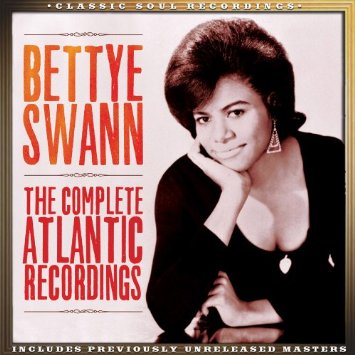
BETTYE SWANN *I don’t think I know anybody, who doesn’t like Bettye Swann. In that sense she belongs to the same category as Gladys Knight. Bettye’s vulnerable and sensitive voice and style combined with strong country-soul songs created a few unforgettable masterpieces in the 60s and 70s. The Complete Atlantic Recordings (www.realgonemusic.com, RGM-0213 / OPCD-8817; 23 tracks, 77 min.; notes by Charles Waring) covers the years 1972 – ’76 and it can be divided into four blocks. David Nathan (www.soulmusic.com) produced the CD. The first seven songs were cut at Muscle Shoals in ’72 and ‘73 with Rick Hall and Mickey Buckins. Victim of a Foolish Heart (# 16/63), Today I Started Loving You Again (# 26/46) and Till I Get It Right (# 88) charted, but I’d Rather Go Blind and the touching Yours until Tomorrow are equally outstanding... and then some. The next four songs were recorded at Sigma Sound Studios in Philadelphia in 1973. Kiss My Love Goodbye and When the Game Is Played on You are airy Philly dancers, while Time to Say Goodbye – arranged by Thom Bell – is a soft ballad. The Boy Next Door, a mid-tempo semi-funkster, was the only one to score (# 71) from this period. The next set of ten songs was produced by Brad Shapiro and recorded in Nashville in 1975, and five of these were previously unreleased. An achingly beautiful ballad called All the Way in or All the Way out was tested as the first single, but shamefully it stalled only at # 83. Either You Love Me or You Leave Me is a poignant Banks-Hampton ballad, and the slowed-down version of This Old Heart of Mine is both innovative and truly soulful. After two melodic mid-tempo songs – the familiar I Want Sunday Back Again and The Jealous Kind – we return to ballads, first the melodic Heading in the Wrong Direction and then the dramatic and soulful Be Strong Enough to Hold On, co-written by Phillip Mitchell. The final two tracks form a duet single with Sam Dees on Big Tree. A gentle floater named Storybook Children scraped the charts at # 84 in early 1976. This is a truly heart-warming CD and an essential compilation for all the fans of classic soul music. I was also planning to review another new CD from the same company, Irma Thomas’ Full Time Woman/The Lost Cotillion Album, but since postal service wasn’t able to deliver it within ten days from the seller’s shipping date I have to skip it this time. 
THE BRILLIANCE of SAM DEES *Only when you listen to a compilation like this, more than twenty recorded samples from Sam’s multi-hundred catalogue of published songs, you really learn to appreciate this man’s talent... and value even higher than before. A genius of a music maker, Sam’s soulful voice and emotive style have impressed soul music circles all over the world, and his 35-year-long recording career – from the first single in 1964, What Will Be Your Destiny, till his last recorded work on Pen Pad in the late 90s – is full of gems that have stood the test of time. But his song-writing career is even more amazing. One in a Million/The Songs of Sam Dees (CDKEND 411; www.acerecords.com; 22 tracks, 80 min., notes by Tony Rounce) is an elegant collection of Sam’s songs released by other artists between 1971 and ’83. To be exact, the opening track is by the master himself, as Sam gently delivers My World, a gorgeous and melodic ballad from 1977. Why this song wasn’t a big hit back then, or later by some other artist is a mystery to me. A brisk and tuneful song called Stop This Merry-Go-Round was covered by John Edwards in 1973. John Edwards: “I was aware as to who exactly Mr. Dees was and I was given a sampling of some of the things he had written, but I never had the opportunity to meet him.” Bill Brandon had scored with the song a little earlier. In 1975 Cicero Blake covered one of Sam’s most beautiful melodies, Your Love Is like a Boomerang, which was originally cut by the Dynamic Soul Machine but it wasn’t written with anybody particular in mind. Sam Dees: “Most of the songs (on the ’95 Kent CD, Second to None) were just written and put on in the form they are on the CD right now. Either managers or the artists listened to the songs and wanted to do them.” John Edwards had a small hit in ’74 with the catchy Vanishing Love, too, but on this CD we get to hear the Chi-Lites’ version, which was recorded over two years later. Sam: “It was another one of those songs that I carried into the studio and demoed. It was one of those cases, when Floyd Smith was listening to a set of demos that had been sent over to him for a recording, and he heard this particular tune and wanted to do it on John.” Instead of Loleatta Holloway’s top-ten hit in 1975, we can enjoy Esther Phillips’ bittersweet and volcanic version of Cry to Me from 1981, which is just fine with me... especially considering that Sam himself is vocally backing her up. Sam: “This tune was written for Loleatta Holloway. The song was started in Birmingham (Alabama) and we carried it over to Atlanta and played it for Floyd Smith. Floyd liked the song, and we stayed in Atlanta for a day or so and we had a chance to sit and watch it recorded.” An irresistible dancer titled Standing in the Wings of a Heartache was recorded by both Ben E. King and Ted Taylor in 1976, and here we get Ted’s track. Sam: “It was meant for anyone. There were some times when I went into the studio only from the standpoint of a publisher and a song-writer and not from the standpoint of singing songs. Naturally I wanted to give it the best performance I could with good lyrics, but not all of the times were they meant for me to record.” A soulful ballad named Just As Soon As the Feeling’s Over was recorded in 1975 by both Margie Joseph and Jackie Wilson, and Jackie became the winner in the draw for this CD. Sam: “I guess everybody that song was played to wanted to do it. Margie and her producer went right away and did the song.” Earlier on this set there were Dorothy Moore’s country-tinged Girl Overboard and Rozetta Johnson’s deepie, A Woman’s Way, and right after Jackie Wilson we have Clarence Carter on a plaintive trotter called Changes and Frederick Knight on the poppy I Betcha Didn’t Know That. There are also some less obvious choices like Ray Crumley’s blue-eyed Good Guys Don’t Always Win and Les McCann’s after-the-hours So Your Love Finally Ran Out (For Me). Loleatta Holloway is finally let loose on a very soulful cover of Sam’s The Show Must Go On, and the underrated Anita Ward – listen to her other stuff besides Ring My Bell – shines on a pleasant mid-pacer named Spoiled by Your Love. In 1973 Sidney Joe Qualls recorded for his Dakar album a joyous mid-pacer named Run to Me. Sam Dees: “This was a part of the Carl Davis’ look at some of the songs that I was doing. As a matter of fact, Carl had, I think, about five artists that we were involved with – had a thing with Barbara Acklin, did a thing with the group Windy City, Sidney Joe Qualls, Tyrone Davis and it might have been Eugene Record.” One of the more memorable ballads on the set is Millie Jackson’s human drama called Mess on Your Hands. Sam Dees: “It was meant for people like her, people who did that kind of songs. Of course Millie stretched it into some other lyrics that were a lot more profane.” Such hit groups as the Temptations (What a Way to Put It), L.T.D. (Where Did We Go Wrong) and Gladys Knight & the Pips (Save the Overtime for Me) also picked up Sam’s songs, as well as Johnnie Taylor, who in 1983 released a snappy dancer titled Seconds of Your Love. For genuine soul music fans, majority of these – mostly slow – tracks are familiar, but, as I mentioned in the beginning, it’s like a revelation to listen to all these gems on one CD. The concluding track on the set is Larry Graham’s big ballad and a million-seller in 1980, One in a Million You. When asked about his personal favourites, Sam answered that “two songs come to mind that I have a great deal of care for and love for – One in a Million and Love All the Hurt Away. Those two songs, with them both being ballads, to me just always had something very, very special about them.” 
MARY LOVEWhen reading Ady Croasdell’s liner notes, it becomes evident that Mary Love’s life was filled with utmost tragedy and music became her rescue on many occasions. You really must read the text to get the full picture. Another escape route was religion and gospel music, and as Mary Love-Comer she devoted herself to that genre since the mid-80s on her many Co-Love albums. The first half of Lay This Burden Down/The Very Best of Mary Love (CDKEND 414; 25 tracks, 78 min.) is comprised of her thirteen Modern sides between 1965 and ’67. Many of them are quite motownesque – You Turned My Bitter into Sweet, Let Me Know, Lay This Burden Down – which is no wonder, when among writers and producers you can spot such names as Marc Gordon and Frank Wilson. They squeezed in some bluesier (Move a Little Closer by Maxwell Davis, # 48, and Think It over Baby by Fred Hughes) and more soulful and down-tempo material, too (Baby, I’ll Come by Ashford & Simpson and Talkin’ about My Man by Arthur K. Adams). Since 1968 Mary wrote most of her own material - witness her Josie and Elco singles in 1968 and ’71, respectively – and here we have one delightful piece, an optimistic 6/8 soul song called There’s Someone for Me. Actually from this period a mid-pacer titled The Hurt Is Just Beginning became her second charted record (# 46). Mary’s four movie songs (1975 – ’77) are big ballads, almost like show tunes, except When We Start Making Love, which is an intense soul ballad. Later we are treated to disco and even to – what you could call – inspirational nursery rhyme. A big talent, but music-wise Mary’s career was somewhat uneven. Unfortunately, she’s not among us anymore. She passed away last summer. 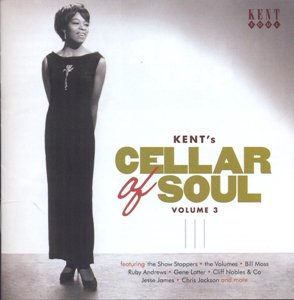
KENTKent’s Cellar of Soul, vol. 3 (CDKEND 412; 26 tracks, 70 min; notes by Ady Croasdell and Tony Rounce) is a collection of popular British mod spins between 1964 and ’69, mostly widely-known dancers. Half of them charted. There are as many as five slow songs, so this is an ideal collection for nostalgic high-speed rollator parties. Personal highlights include J.J. Barnes’ Baby Please Come Back Home and James Carr’s fast and inspirational Freedom Train. The Ad Libs deliver an impressive slow cover of Giving Up, while Carl Henderson’s original reading of Sharing You is quite gentle. Bob & Earl let loose on a dramatic deepie named Baby It’s Over, while Fred Hughes’ Ooh Wee Baby, I Love you hasn’t lost any of its charm during these years. We still have the Ikettes (Peaches ‘n’ Cream), Brenton Wood (Gimme Little Sign), Cliff Nobles (The Horse), Peggy Scott & Jo Jo Benson (Lover’s Holiday), the Show Stoppers (What Can a Man Do), the Platters (With This Ring), Clarence Carter (Funky Fever), Ruby Andrews (Casanova) and a few more, but I think you got the picture by now. It’s up to you, how you want to spend your mod pension money. This CD is one option. 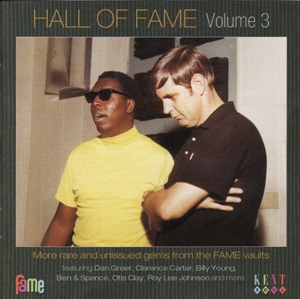
FAMEPresumably the final CD in this series, Hall of Fame, Volume 3 (CDKEND 410; 24 tracks, 65 min.; liners by Tony Rounce) is still able to serve surprisingly impressive Muscle Shoals vault material from the late 60s. On the up- and mid-tempo side there are Dan Brantley’s busy stormer called The Door to My Heart, Billy Young’s scorcher named You’re Too Much, influenced by Otis and Arthur Conley, and Big Ben Atkins’ Don’t Raise Your Voice at Me, a James Brown imitation. George Jackson’s demo named I Don’t Want to Know is a strong and tuneful, mid-tempo song, and Phillip Mitchell is caught singing a familiar but fun uptempo ditty, Hail! Hail! The Gang’s all here. Clarence Carter excels on two ballads, Hey Man and I Done Run out, and so does Roy Lee Johnson on Ain’t Nothin’ Good about Bein’ Lonely and Love Is Calling on Me. On the still deeper side we have Ben & Spence’s L-O-V-E Love, Herman Moore’s Come on Home, Otis Clay’s You Don’t Miss Your Water and I’m in Love (That’s All I Can Say) by an unknown male singer. This has been a good series! In my DVD review below there are some photos from the Muscle Shoals area. 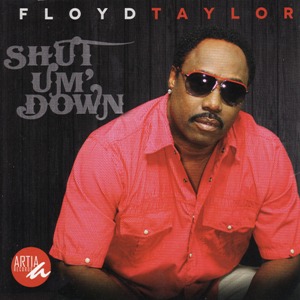
SOUTHERN SOUL STEWFLOYD TAYLORFloyd’s recent passing in February at the age of sixty certainly was unexpected news. He was already signed to arrive to the Porretta Soul Festival in Italy this July. Vocally Floyd at times was very close to his father, Johnnie Taylor, and his Malaco CDs – Legacy, No Doubt and partially You Still Got It - come recommended. You can read about his earlier life and career in my interview with him right after the release of Legacy in 2002 at http://www.soulexpress.net/floydtaylor.htm. His All of Me album on CDS in 2010, however, was a big letdown for me, and I wish I could praise his fifth and last CD, but unfortunately I can’t. With the exception of two tracks, the music on Shut Um’ Down (Artia Rec.) is produced by Simuel Overall, who’s also in charge of the programming. Here and there we can enjoy live horns and guitars. First the plusses. By far the best track for me on the CD is Floyd’s cover of his dad’s small single hit on Beverly Glen in 1982, What About My Love, which in arrangement and delivery is quite true to the original one. Also Can’t Get enough and Turning Up are both uptempo dancers. There are three mid-tempo songs, including the melodic Get Back to Loving and the bouncy It’s on Me, a duet with Mel Waiters - and probably a hit. The rest of the material consists of slow and dull non-songs. On the other hand, they’re very effective lullabies and better than sleeping pills... which, on the other hand, is a pity, because I hate to see such a good vocal talent go wasted. RIP Floyd. MOVING MUSIC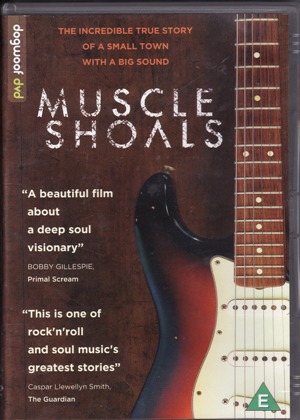
MUSCLE SHOALSGreg Camalier’s documentary entitled Muscle Shoals (Ear Goggles Productions/www.dogwoof.com; 2012 - 1 h 51 min. + 33 min.) has already been shown on telly in some countries and, of course, the very story of Muscle Shoals has been told in print many times before, but the DVD was released only recently. If you wish, you can also read my report on Muscle Shoals in late 2000. The principal character is Rick Hall, who tells not only about Fame Records and its music, but also about some tragic episodes in his life, such as childhood poverty, mother and father separating, the death of his younger brother, the death of his father, the death of his first wife... Arthur Alexander’s You Better Move on (’61), Jimmy Hughes’ Steal Away (’64) and Percy Sledge’s When a Man Loves a Woman (’66) were some of the key recordings on the way to success and they are discussed here, along with later masterpieces by Wilson Pickett, Aretha Franklin, Etta James, Clarence Carter and Candi Staton. All of these artists (except Arthur and Jimmy) are also interviewed for the film. The most famous line-up of the Fame rhythm section in the latter part of the sixties was Jimmy Johnson (g), David Hood (b), Barry Beckett (keys) and Roger Hawkins (d) – also known as the Swampers – and they are all featured here, too, alongside Spooner Oldham, Dan Penn and Clayton Ivey. In 1969 they formed their own Muscle Shoals Sound Studios at 3614 Jackson Highway, and their story runs parallel with Rick’s Fame. The second hour of the DVD focuses more on southern rock – the Allman Brothers Band, Lynyrd Skynyrd etc. – which is the direction where the actual music was heading for, too, in the 70s, but – returning to the roots - as the closing number we can enjoy Alicia Keyes’ touching gospel delivery of Pressing On. In extras there are extended interviews with Candi Staton, Donnie Fritts and Rick Hall with the Swampers, among others. 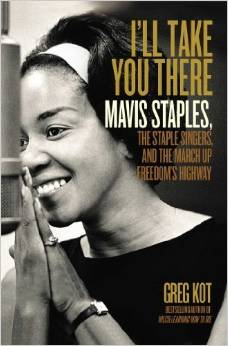
BLACK BOOKCASETHE STAPLE SINGERSGreg Kot’s book, I’ll Take You There (Scribner, ISBN 978-1-4516-4785-3; 310 pages + 8 with photos) – subtitled Mavis Staples, the Staple Singers and the March up Freedom’s Highway – includes a detailed index but only a short, selected discography; more like a “Best Of” recommendation. The book tells the story of the most famous family group in the history of gospel & message music. It goes all the way back to Roebuck’s (“Pops”) father and grandfather, Pops’ foray into music in the 1920s and ‘30s, the move to Chicago in 1936 and finally the forming of the family group with Mavis, Cleotha, Yvonne and Pervis. Their first single on Royal came out in 1953, and after United they joined Vee-Jay in ’55, where they scored with Uncloudy Day a year later. Those days they cut a standard called This May Be the Last Time, which led to the Rolling Stones “writing” their own first hit. Starting from those early recordings, Greg creditably analyzes the music, voices and Pops’ guitar playing. He rightly points out that the Staples music differs from traditional gospel by including elements from blues, folk-music, even country. In a way they are modern sanctified singers. There are also stories about their friendship with some fellow artists like Sam Cooke, the Womack Brothers, Mahalia Jackson, Stevie Wonder and leaders of civil rights movement, such as Martin Luther King and Jesse Jackson. Naturally Bob Dylan’s proposal to Mavis is mentioned, too. After Riverside and Epic the group finally hit big on Stax with such hits as Heavy Makes You Happy, Respect Yourself, I’ll Take You There, This World, Oh La De Da, If You’re Ready (Come Go with Me), Touch a Hand, Make a Friend and City in the Sky between 1970 and ’74. For the Volt subsidiary Mavis also cut in ’69 and ’70 two solo albums, Mavis Staples and the magnificent Only for the Lonely. Still with Curtis Mayfield the group could come up with two smashes – Let’s Do It Again (in ’75) and New Orleans (in ’76) – but further records on Warner, 20th Century and Private I didn’t make big waves anymore. Mavis kept on cutting solo albums in the 80s and 90s – five altogether – but they went without bigger notice and I, for instance, am not a fan of her two albums with Prince on Paisley Park. Pops passed away in 2000 at 85 and Cleotha died of Alzheimer’s disease in 2013. Already in 1973 one member of the family, Cynthia, had committed a suicide. In 1996 Mavis put out an album with Lucky Peterson entitled Spirituals & Gospel, which was dedicated to Mahalia Jackson, and during the last ten years she has released as many as five albums, one on Alligator and four on Anti– Records. This book is based on interviews with Mavis, Yvonne and Pervis and earlier interviews with Pops plus his unpublished memoir – not to mention numerous other interviews outside the family. Although there are no big revelations and actually nothing new for the close followers of the group’s career, the book makes an easy read and a nice story for those, who are not very acquainted with the Staples, their music and legacy. © Heikki Suosalo Back to Deep Soul Main Page Back to our home page |
