DEEP # 4/2014 (July)So far it has been a quiet summer in terms of new significant soul releases. Fortunately the ever-reliable Lee Fields released his latest CD in early June, and below he talks not only about that album, but also other matters related to his music. On the retro-soul front, Ace/Kent have been very active lately, so I dedicate the rest of my column to their seven fine compilations covering music ever since the 1940s through to the 80s. In those reviews there are yesteryear quotes from Dennis Edwards, Millie Jackson and Little Milton, too. Content and quick links:Interviews:Lee Fields New CD release, CD reissue & compilation reviews: Lee Fields: Emma Jean The Contours and Dennis Edwards: Just a Little Misunderstanding Millie Jackson: On the Soul Country Side The Superbs: The Best of the Superbs Little Milton: Sings Big Soul Arthur Prysock: Too Late Baby/The Old Town Singles 1958-66 Pee Wee Crayton: Texas Blues Jumpin’ in Los Angeles Various Artists: More Lost Soul Gems from Sounds of Memphis 
LEE FIELDS *One would think that for a 64-year old artist it gets exhausting being on the road for almost two hundred days in a year. Lee: “I feel like it’s a blessed situation with all these people wanting me to come here and go there and sing here and sing there for them, and they show me so much love that I can’t tell how happy it makes me. When you contemplate the schedules, planes and trains and all this running that we do, you would think that I would be tired, but people make me energized. It just rejuvenates me.” Alongside such fellow artists as Sharon Jones and Charles Bradley, Lee today represents traditional soul music, its deeper side, and all those artists seem to draw more and more people all over the world. “When people come to see me, they know that everything is totally genuine. I say things that naturally come out of my mouth. And I try to choose songs that I feel that have a story that needs to be told. There are a lot of people making records today. I try to make the best records that I possibly can, so people can relate to the stories I’m singing about.” Another delightful thing is that the music from this Brooklyn family of Daptone and Truth & Soul labels seems to be bridging generation gaps. “I draw young and old. I appeal even to kids. In Chicago recently on the front line there were, I guess, 14-15-year old girls. It’s a beautiful thing, when you’re making music that merges generations… and nationalities. That’s why I don’t get tired” (laughing). “I think what I’m doing continues to grow. I keep very close eye on changing things. I try to be as versatile as possible and I want to sing about what we do in our everyday life, what I see is happening – how good it feels just waking up today, or frustrations of going to the same job every day that maybe you don’t like. I try to sing about things that people really, really feel. And I think that’s what makes my music relevant to people today.” 
EMMA JEANYou can read about Lee fields’ earlier career and eventful life at http://www.soulexpress.net/deep5_2012.htm#leefields. Lee’s latest and third album for the Truth & Soul label is titled Emma Jean (TS026-CD; https://truthandsoulrecords.com). “That album was named after my mother, and I’m so happy that we did that. It wasn’t planned. We all wanted to find something that was very personal to me, something that really moved me every time I speak and something that really inspired deep emotions, when I think about it. Although I love my mother and father equally, I made it Emma Jean because my mother was the first to go. I had my father a number of years more than I had my mother. The moment I was told that she had passed away, I was gasping for air. It was very difficult for me to breathe. Now every time I go on stage today and say that this and this song is from the Emma Jean album, I can see my mother.” Lee is backed by his long-standing colleagues in music, the Expressions, and the CD was produced by Leon Michels, who also contributes on vocals and plays many instruments on the background. He’s also running the Truth & Soul label together with Jeff Silverman. “Jeff is still in the picture. He has a greater role at this particular time. He’s into the marketing and a lot of other things.” The new songs were created jointly. “We go in, and we drop our egos. When I leave the stage, I become a regular guy, not the singer Lee Fields. And that’s how we all do it at Truth & Soul, Leon and everybody… When we write a song, everybody’s contributing. It’s not about, who came up with the idea.” 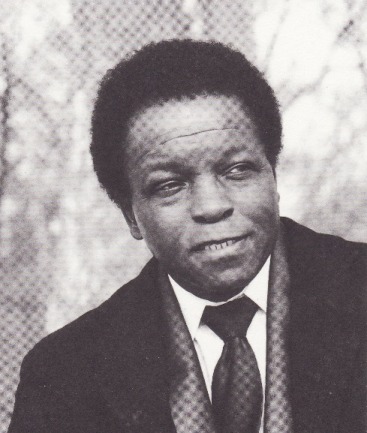
JUST CAN’T WIN“The previous album (Faithful Man in 2012) took more time to make its impact. It took many months, before it was recognized. But now people seem to play this new album over and over. I’ve been told that the songs on this new album seem to be pretty much what people are enjoying at the moment. There are many songs that people are gravitating to, like Stone Angel, Don’t Leave Me This Way, Just Can’t Win and Magnolia. Everybody at the record label is so excited, because we never had a record to get this much attention and move so well at this particular point.” The current single is a mellow and melodic mid-tempo song called Just Can’t Win, and the first single was a serene and picturesque cover of J.J. Cale’s Magnolia, with Russ Pahl’s steel guitar adding country flavor to it. “Leon came up with the idea of steel guitar, which I thought was absolutely ingenious. I was raised in North Carolina, and as a young kid I used to listen to country & western music, because at that particular time they didn’t have a lot of soul stations. I listened to people like Dolly Parton, the Oak Ridge Boys, Earl Scruggs, Porter Wagoner, so country & western music stayed in my blood.” Another outside song on the CD is Leon Russell’s mid-tempo In the Woods, also from 1972. Paralyzed is a turbulent downtempo song with a slightly experimental rhythm. It was written by Dan Auerbach of the Black Keys. “I just want to say now ‘thank you, Dan! Thank you, Dan! I’m so honoured.” After the fast and horn-heavy Standing by Your Side, we can enjoy an intense and powerful deep ballad called Eye to Eye. “Eye to Eye is one of my favourites on the album. I wish that this song would be instrumental in some way of making good of a lot of the relationships that are about to collapse. We got a lot of relationships that can be saved, if people just talk.” All I Need is a pumping uptempo instrumental, and it’s followed by a melancholy song named It Still Gets Me Down, on which Lee really cries his heart out. “I sing about what we do as human beings. There are two persons and both of them have strong commitments, but they’re still attracted to each other. I think people should be committed to one person, but we get tied up in situations. But I don’t condemn them. Who am I to judge? I only sing about what we do.” Talk to Somebody is a pulsator and closest to James Brown that Lee gets on this CD. “I was definitely influence by James Brown, no doubt about it… and Otis Redding.” Stone Angel is another slow song of despair – incidentally, one short passage reminded me of William Bell’s I Forgot to Be Your Lover – and the concluding number is another intense and powerful deep soul ballad called Don’t Leave Me This Way. “My main focus, when I’m singing a song, is to get passion through. When people feel real passion, they can appreciate the song more.” “I really appreciate the support from my fans through the years. When I speak of love, I really genuinely mean everything that I say, because my day-to-day existence is still on the foundation of love.” (Interview conducted on July 15, 2014; http://leefieldsandtheexpressions.com). 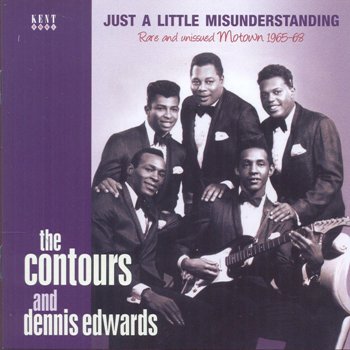
COMP-ART-mentTHE CONTOURS and DENNIS EDWARDS *Dennis Edwards, who was born in Alabama on February the 3rd in 1943, was surrounded by church music, so when he moved to Detroit as a young schoolboy it was only natural for him to become a member in gospel quartets. Dennis: “I sang with the groups called the Crowns of Joy and the Golden Wonders. Those were the only two, and we never recorded. We were just one of those little spiritual groups that would sing at the church on Sundays. I was around twenty, twenty-two. The Crowns was the first group. That was actually a church group from my father’s ministry. It was five Wilson brothers and myself. None of us were celebrities at that time, just young boys trying to start a career. The Golden Wonders were like a step-up into the religious field… This is the period, when I got noticed by some of the rock artists, because a lot of them took notice of some of the great spiritual groups because of the harmonies.” Already during his service period in Munich, Germany, in the early 60s Dennis had a secular ensemble, too. “I was playing keyboards and I met a guy that played drums and a guitar player. We got together and formed a group called Dennis Edwards & the Firebirds. We started off like a joke, but we started making more money than I was making in the service, playing the gigs on weekends. That’s how I really started. The Firebirds was rock ‘n’ roll. We did everything that was current. We did all the number one records and played the top ten.” “Then I got back to Detroit and I wanted to continue. Once you get the bug, it’s pretty hard to get out of it. I played some small places with a guitar player and a four-piece rhythm section. We did all the Motown action.” Those days Dennis cut his first single on International Soulsville 100 in Detroit in 1966, a steady dancer called I Didn’t Have to (But I did), written by Bob Hamilton and backed with the faster Johnny on the Spot, arranged by Joe Hunter. “This guy came down to see me and he said ‘I wanna do a record on you’. It was a small independent label, and I found out at this time that you need a gigantic machine to make a record a hit. I learned about the business as I went on. I had to have not only a good record but also a good production team behind you – airplay, production… the whole thing.” “I ended up playing one club, which got packed every night, seven days a week. That’s when I actually met Smokey and the Temptations… A guy named James Jamerson, a super bass for Motown Records, came down and said ‘listen, we want you to take an audition to Berry Gordy. We love your voice’. I went down and took an audition, played Love Is a Hurting Thing by Lou Rawls. At the same time Berry Gordy was like overflown - he had Stevie, Smokey, Marv Johnson, the Isley Brothers, the Spinners, the Supremes… everybody. He said ‘look, we’re gonna sign you up and we’re gonna give you 250 dollars a week’. He kept me on a $ 250 retainer for a year and a half. I got really bored. I wanted to sing, even though I was getting the money every week. My dream was to be a singer.” 
YOUR LOVE GROWS MORE PRECIOUS EVERYDAYDennis was signed as a single artist, but his first break in recording at Motown took place after joining the Contours, who at that point performed in the line-up of Sylvester Potts, Gerald Green, Council Gay and Hubert Davis. Dennis: “I was really upset with Motown. At the time, however, the lead singer of the Contours had to be hospitalized. They asked me if I wanted to go out on the road with them. I did, and we ended up opening for the Temptations.” The title of the recently released Kent compilation on the Contours and Dennis Edwards is Just a Little Misunderstanding (CDTOP 419; www.acerecords.com; 26 tracks, 71 min; liners by the man who really knows his thing, Keith Hughes). It covers the years from 1965 till ’68 and it includes fourteen previously unreleased tracks and eight that were not released at the time but on later albums and CDs. Dennis is leading on fourteen songs. With the Contours, Dennis first cut in December 1966 the mid-tempo Your Love Grows More Precious Everyday, which was produced by Harvey Fuqua and Johnny Bristol and was released as the B-side to another mid-tempo song, poignant and touching, called It’s So Hard Being a Loser. That A-side, also led by Dennis, was written and produced by James Dean and William Weatherspoon, and it actually remains the last charted single for the Contours in 1967 (# 18–r&b / # 79-pop). That single on the Gordy subsidiary (Gordy 7059) and the preceding single (Gordy 7052) in 1966 are actually the only four tracks on this CD that were released at the time. Joe Stubbs is leading on the ‘66 one, on a popular and catchy dance track named Just a Little Misunderstanding (# 18-r&b / # 85-pop) coupled with the funky Determination, a Junior Walker type of a track. On this comp there are nine other pre-Dennis tracks (’65 – ’66), where you have either Joe Stubbs, Jerry Green, or Billy Gordon on lead vocals. Billy sings on First I Look at the Purse, which was cut after the hit version and left in the can, and Jerry is on Baby Hit and Run, which is a different take of the title track of the 1974 U.K. album. There are also storming and funky covers of two earlier Motown hits, Need Your Lovin’ (Want You Back) and Come See about Me. Joe Stubbs is leading on them, but they were reassigned to the Originals, because Joe had joined them and was replaced by Dennis in the Contours. One very odd track is the April/’67, so-so remake of the southern soul classic, When a Man Loves a Woman. Actually, it’s the only slow song on this CD. Dennis’ leads with the Contours were cut for the most part in 1967, and they included such familiar songs as It’s Growing, What Becomes of the Brokenhearted, Ain’t That Peculiar, What’s So Good about Goodbye, I’ll Turn to Stone and Sunny. They all sound good, but even more thrilling are two fast and melodic songs, Keep on Tryin’ (Till You Find Love) and a cover of the Four Tops’ I like Everything about You. Dennis: “I sang with them for a year, and when I came home I had found out that I was a good enough singer to be out there. I didn’t enjoy the will of the Contours. The Contours didn’t want to go where I wanted to go. Sometimes you’ll be with a group, and they’re good, but they don’t want to really be the number one group. I wanted to be a little better. So I came back home to my Firebirds.” Next Dennis was about to join Holland-Dozier-Holland at Invictus – “they were ready with records” - but eventually he ended up replacing his friend David Ruffin in the Temptations. 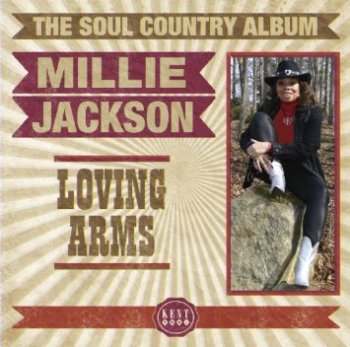
MILLIE JACKSON *Millie Jackson and country-soul is a precious combination. It has produced a lot of unforgettable gems. Most of them are now collected on yet another Millie compilation entitled On the Soul Country Side (CDKEND 418; 17 tracks, 65 min., notes with an interview by Chris Bolton). It covers the years 1975 – 81 and the songs derive from from six albums – Still Caught Up, Feelin’ Bitchy, Get It Out’cha System, Royal Rappin’s (with Isaac Hayes), For Men Only and Just a Lil’ Bit Country. That 1981 country album was the main source with six tracks lifted from it, but the Nashville-cut LP wasn’t a big seller (# 43-soul / # 201-pop in Billboard) and I also remember being a bit disappointed with it at the time of its release. The songs didn’t have the same impact as most of Millie’s earlier country-soul goodies, such as the charted ones – Loving Arms, If You’re Not Back in Love by Monday, Sweet Music Man, You Never Cross My Mind (with Isaac) – which are all included here. However, I quite enjoyed a few of the slow ones on the country album like Rose Coloured Glasses and Till I Get It Right, but for instance the uptempo I Can’t Stop Loving You (# 62-soul) just didn’t sound and feel right. But Mille herself liked the album and here’s what she had to say about it in my interview with her: “We decided that we would have the biggest pop record we’ve ever had, for crossover. We had meetings and we got our marketing strategy together, and we had the right budget to support it. Two weeks before the record was released, the president of Polygram left the company. We got lost, because the new president came in and we had to start all over again. Needless to say, I went to the Grand Ole Opry two years later... and three or four albums later. But I like the album. It’s only that none of those things that were supposed to be done weren’t done because we got a new president.” Other personal highlights on this compilation include Angel in Your Arms, You Needed Me (with Isaac), I Wish I Could Hurt That Way Again and Cheatin’ Is. The last track on the CD is a recently recorded downtempo “revenge” song called Black Bitch Crazy, based on Tyler Farr’s Redneck Crazy. (www.weirdwreckuds.com). 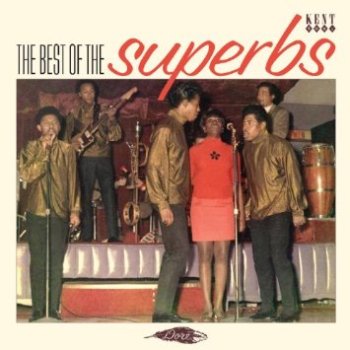
THE SUPERBSHot on the heels of L.A. Soul Sides (CDKEND 415), featuring a number of soul artists that recorded for the Doré label in the 60s, Kent now focuses on Doré’s premier group on The Best of the Superbs (CDKEND 417; 24 tracks, 67 min., liners by Ady Croasdell). Majority of the tracks was recorded between 1964 and ’68, although five derive from the “pension period” of 1972 and ’87. There were many changes in the line-up, and they are all documented in the discography part at the end of the 20-page booklet. In the beginning the music was melodic and innocent and many of these poppy “teenage romance” tracks were sweetened by Gene Page. Harmony-wise the sound reflected the transition from doowop to fledgling soul - albeit a couple of years behind – and on most of these records the high-voiced Eleanor Green is the lead vocalist of the quartet. Equally high-pitched Samantha Clark was the very first leading lady. Strangely, only one single charted. It was a cover of the King Cole Trio’s 1946 recording of Baby, Baby All the Time, which scraped the bottom of Billboard’s “Hot 100” charts at # 83 in 1964. Another throwback to the 40s was a cover of Jack Lawrence’s ’44 song My Heart Isn’t In It. Ronnie Cook leads on a richly orchestrated remake of Roy Orbison’s golden hit in 1960, Only the Lonely, and also Gene Page’s uptown arrangement on Miss Toni Fisher’s ’59 hit, The Big Hurt, and the almost Spectorian sound on I Was Blind in 1964 make musically a refreshing break in the chain of the Superbs’ sweet and lush single sides those days. From 1965 onwards they started testing the dancers and stompers, including the northern favourite, I Wanna Do It with You Baby. By this time Eleanor was replaced by Lawrence Dickens. Later they still tried Claudia Lennear on Richard “Dimples” Fields’ ’68 atmospheric ballad One Bad Habit and Sandra Peterson on a soft ’72 slow song called Your Eyes as lead vocalists. Late 70s meant disco and on the very last song on this CD, Get Ready for Love (from 1987), the reincarnated group returns to sophisticated sound with a soulful interplay between the two lead singers. It was a long way from pop to hop to disco and finally to soul. 
LITTLE MILTONJames Milton Campbell, Jr. (1934-2005) is primarily filed under blues, but a lot of soul music fans were equally impressed by his “bluesoul” output on Checker, Stax, Glades and other labels in the 60s and 70s and kept buying his records in later decades, too. Soulful blues or balancing between those two close genres was an integral part of Milton’s music. It came naturally and it characterised his style. Although quite predictable, his records on the other hand were steady and reliable. He wasn’t a stylist in terms of using refined nuances. Mostly he sang loud and hard, with a strong blues backbone - almost like in an afterglow of R&B shouter tradition. In the Soul Express interview in 1999 he mentioned “that’s basically been my formula throughout my career and it’s been very successful for me.” For almost two decades (1984-2002) this formula remained unchanged on Milton’s fourteen Malaco albums and now Kent has culled some of the more soulful tracks from ten of those CDs for Little Milton Sings Big Soul (CDKEND 413; 18 tracks, 76 min., notes by Tony Rounce). Besides accompanying himself on guitar, you could always rely on real instruments backing Milton, including a stable horn section. Milton: “When you hear music that I record, believe me, they’re live musicians and it’s enjoyable, because they can’t get soul or feelings out of a machine.” The blues pushes through on A Nickel and a Nail (originally by O.V. Wright) and Can’t Trust Your Neighbour (Johnnie Taylor), but soul certainly dominates on A Man Needs a Woman (James Carr), on the intense That’s the Way I Feel about ‘Cha (the late Bobby Womack), I’d Rather Go Blind (Etta James), Lovable Girl (again James Carr) and on the churchy I Had a Talk with My Baby Last Night (James Cleveland and Mitty Collier). More delicate and country-tinged versions are delivered on Misty Blue and Rainy Night in Georgia. Much to my delight, Little Milton has also covered some unforgettable cheating songs from the past – Caught in the Act (of Gettin’ it on) (Banks & Hampton and the Facts of Life), This Time They Told the Truth (Z.Z. Hill, written by Frederick Knight) and Mr and Mrs Untrue (Mighty Sam and Candi Staton). One more tune that never fails to move me is McKinley Mitchell’s plaintive The End of the Rainbow. Add to the above still five upbeat tracks – including a remake of Milton’s own # 1 hit in 1965, We’re Gonna Make It – and you have a nice package of Mr. Campbell’s soul sides from later years. As always, there would have been other candidates, too – such ballads as Right to Sing the Blues (actually soul, written by George Jackson), If You Give Me Your Heart (a “separate duet” with Dorothy Moore, originally by Formula 5), I’ve Got to Remember (again by George Jackson), Jealousy and Cheatin’ Is a Risky Business – but, of course, there’s only so much you can put on one CD. Milton (in ’99): “I have a good relationship with Malaco, with all of the executives, with everyone that has participated in the distribution and the making of the music.” (www.littlemilton.com). 
ARTHUR PRYSOCK *‘Classy’, ‘sophisticated’ and ‘gentleman’ seem to be suitable words to describe Arthur Prysock and his style, as well as ‘deep, masculine baritone’ tells all about his voice. Now we’re talking about real old school, although the music on Too Late Baby/The Old Town Singles 1958-66 (Ace, CDTOP 1401; 24 tracks, 62 min., liners by Tony Rounce) isn’t but fifty years old. Arthur (1924-97) first recorded at the age of twenty with Buddy Johnson, went solo in 1952 and during his first stint with Old Town Records, which we are surveying here, cut nine albums and twenty-four singles. For the most part the music was romantic and mellow, even lush and sweet – both evergreens, and intimate, melodic new songs. Billy Eckstine was his idol, but every now and then you could hear hints of Brook Benton and especially O.C. Smith in his voice. During this eight-year period his biggest hit was a slow, wistful swayer called It’s Too Late, Baby Too Late in 1965 (# 11-r&b / # 56-Hot), co-written by Buddy Johnson. Also a fast ditty named One More Time (# 30-r&b) in 1961 and a cover of a 30s song, The Very Thought of you (# 19-r&b), charted in 1960, although the latter one is not included on this compilation. Bubbling under the Hot-100 were Our Love Will Last (# 128), Close Your Eyes (# 124), Without the One You Love (# 126 – not included), Only a Fool Breaks His Own Heart (# 125) and Let It Be Me (# 124). I Worry about You, The Greatest Gift, Keep a Light in the Window for Me, If I Should Fall in Love, Do You Believe, Pianissimo, There Will Never Be another You, Full Moon and Empty Arms and Teardrops in the Rain are the songs that bring the real crooner out of Arthur. But he also knew how to rock – I Just Want to Make Love to You, Good Rockin’ tonight and as a novelty the old folk song, Crawdad. Above I already mentioned One More Time, which was co-written by Bert Berns and in reality also produced by him, not by Hy Weiss. Close Your Eyes was a jazzy uptempo number and I’m Crossing Over crosses over to bossa nova. Come and See This Old Fool is a ‘63 uptown toe-tapper, co-written by Gene Redd, which you can bravely file under soul music. House by the Side of the Road is an inspirational and thrilling, swinging mover, whereas Chuck Jackson could easily have recorded the mid-tempo Our Love Will Last - no wonder, because Gene Redd and Robert Mosely wrote this one, too. Arthur recorded the original and classy version of My Special Prayer in 1963, as well as the beautiful ballad called Only a Fool Breaks His Own Heart in 1965, which Long John Baldry, Tom Jones and many, many others later covered. I also enjoyed Arthur’s interpretations of Ebb Tide and Let It Be Me. Ten years later Arthur still bounced back, when his Gamble & Huff disco hit in 1976, When Love Is New, turned him into Lou Rawls number two. But that’s another time and another label, so let’s enjoy this fine CD we have at the moment. Classy music, indeed! 
PEE WEE CRAYTONAccording to Stephen Propes’ great new book “Old School/77 Years of Southern California R&B & Vocal Group Harmony Records 1934-2011”, Connie Curtis Crayton (1914-85) “arrived in Oakland in about 1941 and in L.A. in 1948. Tutored early in his career by T-Bone Walker, Crayton’s Modern label debut was a cover of T-Bone Walker’s I’m Still in Love with You b/w a languid instrumental with an active bridge called Blues after Hours on Modern (624), a rewrite of Erskine Hawkins After Hours and the prototype for Chuck Berry’s Night Beat.” Texas Blues Jumpin’ in Los Angeles, subtitled The Modern Music Sessions 1948-1951, (Ace, CDCHD 1400; 28 tracks, 79 min.; notes by Dick Shurman) is the third volume in Ace’s Pee Wee Crayton series and it features an alternate take of Blues after Hours (# 1 – Race in 1948) and I’m Still in Love with You, a blues ballad with Pee Wee’s vocals and served here with a false start. Altogether on this CD there are 20 alternate takes and 5 previously unissued tracks. Pee Wee’s follow-up for Modern was a jump instrumental titled Texas Hop (# 5 – Race in ’48), which is presented here as an outtake, too. Crayton recalled “I went to Modern to record and Jules Bihari told me to play something. I played something he liked, and he told me that’s the one we’ll put out. The Texas Hop” (from Propes’ book). Pee Wee’s third and last charted record was a cover of a blues ballad called I Still Love You (# 6 – r&b in ’49), written by Buddy Johnson and presented here - you guessed it - as an alternate take. Pee Wee’s Modern stint lasted about two and a half years, and in the booklet you can find a detailed, six-page discography. On this compilation there are 10 instrumental tracks and 17 with Pee Wee’s singing (I don’t count a ½-minute false start track of Brand New Woman), and of those vocal tracks 4 are jump and 13 slow and sweet ones. Pee Wee’s mellow singing bears a resemblance to that of Charles Brown, Ivory Joe Hunter and Ray Charles those days. Actually he played with all of them, and also with Lowell Fulson and Gatemouth Brown, among others. Although he wasn’t one of the greatest singers in the world, his sophisticated and after-the-hours style appealed to certain audiences, including gentlefolk in lounges. With the exception of four songs, either alone or together with Jules Taub Pee Wee wrote all of the material on this CD. 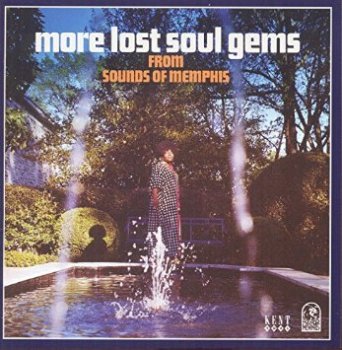
MORE SOUNDS OF MEMPHISA thorough search in the vaults has produced More Lost Soul Gems from Sounds of Memphis (CDKEND 421; 22 tracks, 66 min., notes by Dean Rudland), another compilation of unreleased tracks from Gene Lucchesi’s label between 1964 and ’74. Only four of these tracks were officially released – Carroll Lloyd’s intense soul ballad named A Great Big Thing b/w an almost unrecognizable half-stomping version of Poor Side of Town in 1968, Tommy Raye’s bluesy jogger called You Don’t Love Me (probably influenced by Hi-Heel Sneakers) in 1964 and Willie Cobbs’ similar cover of Hey Little Girl in 1973. Many familiar names from the Memphis soul scene crop up. George Jackson is featured on a mid-tempo, churchy tune called Hold on Hold out. Dan Greer’s tearing delivery on a mid-tempo demo of Since My Baby Left Me is quite penetrating. William Bollinger’s That’s Why I Keep Her is a catchy loper and Barbara & the Browns once again come up with a soulful big ballad, Human Emotions. Art Jerry Miller’s You Can Always Depend on Me owes a bit to Tyrone Davis, while the Jacksonians’ unfinished, slowed-down cover of Tamla’s If I Could Build My World around You is constructed in a Mel & Tim mould. Poor Fran Farley reminds me of no-one, since I don’t know that many off-key singers. Besides William Bollinger, Barbara & the Browns and Carroll Lloyd, in the thumbs-up category we still have Marjorie Ingram’s rousing Tempted, Rudolph Taylor’s deep reading of Misery (also known as Search Your Heart by James Carr), a rolling toe-tapper called You’re Using Me – another one from Rudolph - Barry Jones’s intense That’s How I Take to You and Billy Cee & the Freedom Express’ airy dancer named Don’t Matter If It’s in the Past. © Heikki Suosalo Back to Deep Soul Main Page Back to our home page |
